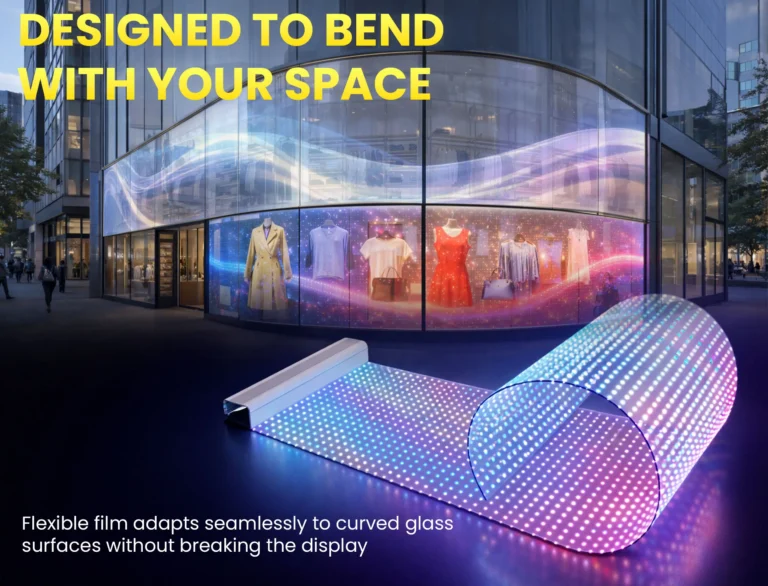
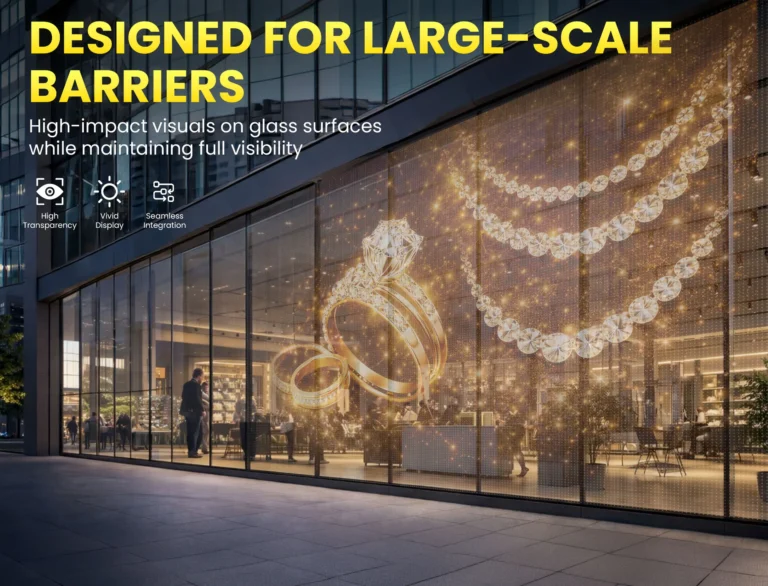
In recent years, transparent LED film has become one of the most innovative display technologies used in modern architecture, retail environments, and commercial buildings. By transforming ordinary glass into a digital display surface, this technology enables businesses to present dynamic visual content without blocking natural light or interior visibility.
One of the most common questions businesses, architects, and designers ask before installing LED film is simple but important:
“Is transparent LED film bright enough to be visible during the day?”
Daylight visibility is a crucial factor for any digital display technology installed on glass surfaces, especially in storefronts, shopping malls, and building facades. Understanding how brightness works—and what level of brightness is required—can help businesses choose the right solution for their environment.
Brightness in LED displays is measured in nits, also known as candela per square meter (cd/m²). This unit measures how much light a display emits. The higher the nit value, the brighter the screen.
Different types of digital displays typically operate within different brightness ranges:
|
Display Type |
Typical Brightness |
|
Indoor LED screens |
800 – 1,500 nits |
|
Standard LCD displays |
300 – 700 nits |
|
Outdoor LED billboards |
5,000 – 10,000+ nits |
|
Transparent LED film |
3,000 – 4,000 nits |
|
VR Smart Glass Transparent LED film |
4500 nits |
Because transparent LED film must maintain high transparency, it generally operates with slightly lower brightness levels than large outdoor LED billboards. However, modern LED film technology has significantly improved in recent years, allowing it to deliver excellent daylight performance.
For example, VR Smart Glass Transparent LED film features advanced high-luminance LED technology capable of reaching up to 4500 nits, allowing digital content to remain bright, vivid, and highly visible even on sun-exposed glass surfaces.
In outdoor and high-light environments, displays must compete with sunlight, which is extremely powerful. Direct sunlight can exceed 100,000 lux, making it challenging for screens with low brightness to remain visible.
If a display does not produce enough light, its content may appear faded or difficult to read during daytime hours.
This is why brightness plays such a critical role when choosing digital display technology for glass installations such as:
Displays installed in these locations must be bright enough to maintain strong visual contrast against daylight conditions.
Yes. Modern transparent LED film is designed specifically to perform in environments where natural light is present.
With brightness levels reaching around 4500 nits, high-quality LED film can remain clearly visible even in daytime conditions.
Several factors contribute to this visibility:
High-Luminance LEDs
Advanced LED chips used in transparent film emit strong light output while maintaining compact size. This allows the display to produce bright images without compromising transparency.
Optimized Pixel Structure
The spacing between LEDs (known as pixel pitch) allows light to pass through the film while still producing vibrant digital content.
Contrast Against Glass Background
Because LED film is mounted on transparent glass, the display naturally contrasts against the background environment, helping content stand out even under bright lighting.
While brightness is an essential component, several other factors also influence how well transparent LED film performs during the day.
Glass Orientation
The direction the glass faces can affect visibility. Windows exposed to direct sunlight for long periods may require higher brightness levels compared to shaded areas.
Viewing Distance
Transparent LED film is often designed for medium to long viewing distances. As distance increases, images appear clearer and more cohesive.
Content Design
Content with strong contrast, bold colors, and clear typography tends to perform better in daylight conditions.
For example, high-contrast visuals such as:
are typically more visible than complex images with subtle color gradients.
Environmental Lighting
Indoor installations inside shopping malls or airports often require lower brightness compared to outdoor street-facing windows.
Transparent LED film with brightness levels around 4500 nits is well suited for many commercial environments.
Retail Storefront Windows
Retail stores use LED film to display promotional content while maintaining visibility into the store interior. High brightness ensures the content remains visible throughout the day.
Shopping Mall Glass Facades
Large glass surfaces in shopping centers can become dynamic digital advertising platforms without blocking natural light.
Car Showrooms
Automotive showrooms often install LED film on large glass windows to showcase brand videos and promotional content.
Corporate Buildings
Companies use LED film for branding, informational displays, or architectural media installations.
Airports and Exhibition Spaces
Large glass walls in transportation hubs and event venues can host digital messaging without obstructing views.
One of the most impressive aspects of transparent LED film is its ability to balance visibility and transparency.
Traditional LED screens achieve brightness by covering surfaces completely with LEDs. Transparent LED film, however, must allow light to pass through the display.
This requires a careful balance between:
Advanced designs allow LED film to maintain transparency levels while still delivering strong visual performance.
This makes the technology particularly attractive for architectural environments where maintaining the visual openness of glass is important.
Another advantage of modern LED film systems is the ability to adjust brightness dynamically.
Smart control systems allow users to modify brightness levels depending on the time of day or lighting conditions. For example:
This helps maintain optimal visibility while also improving energy efficiency.
As LED technology continues to evolve, transparent displays are becoming brighter, more efficient, and more flexible.
Future developments may include:
These innovations will allow transparent LED film to play an even greater role in retail marketing, architectural design, and digital communication.
Daylight visibility is one of the most important considerations when installing digital displays on glass surfaces. Transparent LED film has advanced significantly in recent years, offering brightness levels that allow content to remain visible even in bright environments.
With brightness reaching up to 4500 nits, modern LED film solutions provide strong performance for retail storefronts, commercial buildings, showrooms, and other glass-based installations.
By combining high brightness with transparency and architectural integration, transparent LED film opens new possibilities for turning ordinary glass surfaces into dynamic digital communication platforms.
As cities continue embracing digital architecture and smart display technologies, transparent LED film is set to become an increasingly important tool for businesses looking to create engaging visual experiences in modern urban environments.