In an age of digital transformation, traditional advertising tools are rapidly giving way to smarter, more immersive technologies. One of the most groundbreaking among these is the transparent LED film, a product that’s quietly redefining the architecture of public spaces—and the future of visual communication.
At the heart of this innovation is VR Smart Glass, a leader in high-performance glass technologies that now offers transparent LED film to transform plain glass surfaces into dynamic digital displays—without compromising transparency, aesthetics, or natural light.
This isn’t just a tech trend; it’s a paradigm shift in how businesses, architects, and advertisers think about space, engagement, and storytelling.
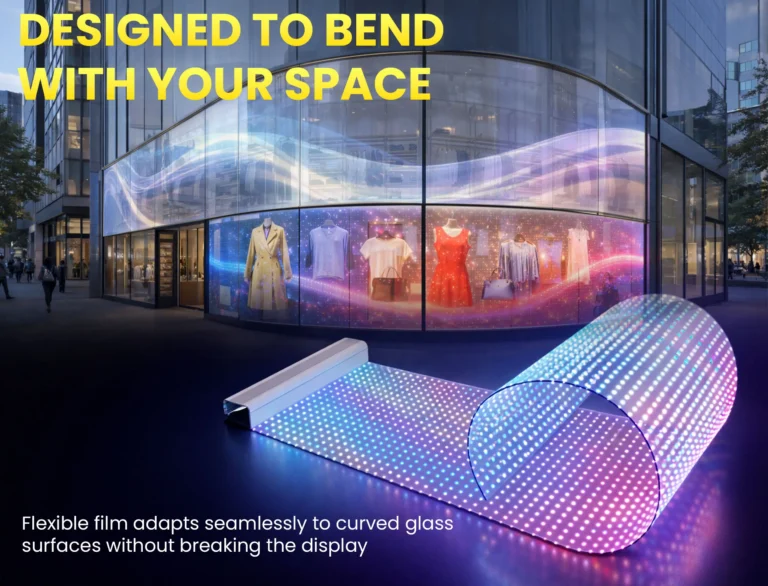
Transparent LED film is a flexible, ultra-thin film layer embedded with micro-LEDs that can be applied directly to glass, acrylic, or other clear surfaces. It allows content—videos, images, animations, text—to be displayed on glass while maintaining its transparency when turned off.
Unlike bulky LED screens or backlit signs, this film is nearly invisible when inactive. But when powered, it turns the glass itself into a vibrant, animated display, visible both from inside and outside the building.
Transparent LED film works by integrating tiny light-emitting diodes (LEDs) onto a transparent conductive substrate. Each diode functions as a pixel, and when connected to a controller, they illuminate to form video content across the surface of the glass.
High Transparency: Up to 85% transparency, depending on pixel pitch.
Ultra-Thin Profile: Less than 2 mm thick, practically invisible when off.
Custom Pixel Pitch: Tailored from 3.9mm to 10mm or more depending on display clarity and distance.
Modular Design: Can be cut, curved, or tiled to fit unique glass surfaces.
Lightweight: Unlike LED cabinets, this adds minimal structural load.
Weather-Resistant Options: Suitable for both indoor and outdoor applications.
Transparent LED film turns any glass surface into a canvas for dynamic content—transforming passive architecture into a storytelling platform. This technology brings the digital world out of screens and into the very skin of buildings.
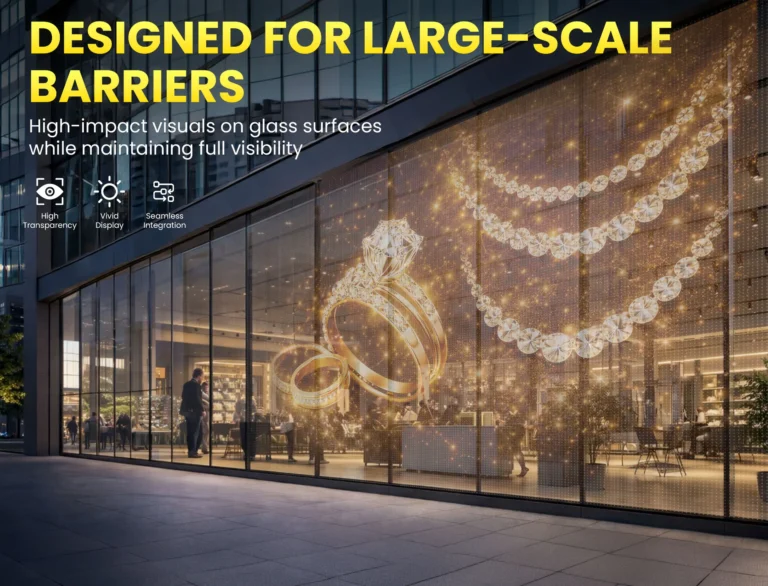
Retail storefronts can showcase live promotions, videos, or seasonal content while maintaining visibility into the shop.
Corporate towers can display branding, environmental data, or event info.
Airports, stadiums, and train stations can offer dynamic signage that blends into the environment.
Museums and galleries can integrate immersive educational visuals onto display cases or glass walls.
Traditional outdoor media—billboards, vinyl banners, lightboxes—are static, require manual installation, and take up space. Transparent LED film breaks all these limitations and offers unmatched flexibility, elegance, and performance.
One of the greatest strengths of LED film is that it turns glass into media, without sacrificing transparency or daylight. When the display is off, the window performs as usual. When turned on, it becomes a living screen.
Modern architecture values clean lines and open spaces. Unlike LED panels or signage boxes, LED film integrates seamlessly into the building envelope, preserving the original design intent.
Manage your content remotely through cloud-based platforms. Update sales, weather info, videos, live data feeds—all instantly and remotely.
LEDs are inherently energy-efficient. With brightness control and low power consumption, these systems reduce the carbon footprint compared to large traditional LED billboards.
Outdoor-rated LED films come with UV protection, waterproofing, and dust resistance, making them suitable for exterior facades and harsh urban climates.
A flagship store in Seoul integrated LED film into its 10-meter-high facade to display fashion shows in real time—capturing passerby attention and increasing foot traffic by 28%.
Transparent LED panels installed in airport terminals are used for both advertising and flight information, replacing clunky signage with modern, ambient messaging.
In Shanghai, a Grade-A office tower uses transparent LED film to show ambient weather effects (rain, sunlight, clouds) on its glass walls—creating a digital skin that interacts with the environment.
Transparent LED film is much more than just an innovative display technology—it represents a fundamental shift in how we think about glass as a functional element in architecture and advertising. Traditionally, glass has served as a passive barrier, a transparent window that separates inside from outside. Today, thanks to advancements like those pioneered by VR Smart Glass, glass surfaces are evolving into active, dynamic media platforms that engage audiences in ways previously unimaginable.
Imagine walking past a building where the very windows themselves come alive with vibrant content—showcasing brand stories, delivering real-time information, or simply adding layers of beauty and intrigue to urban landscapes. This is no longer a futuristic vision but a reality enabled by transparent LED film. By preserving transparency while delivering high-impact visuals, this technology harmonizes two seemingly conflicting demands: maintaining architectural elegance and maximizing advertising effectiveness.
For businesses, this means new opportunities to capture attention in increasingly crowded marketplaces. Instead of static posters or bulky digital screens, transparent LED film allows for seamless, adaptive advertising that blends naturally into its environment. Brands can update campaigns instantly, tailor messages based on time of day or audience, and create immersive experiences that captivate passersby. This flexibility translates directly into improved engagement, foot traffic, and ultimately, higher ROI.
For architects and designers, transparent LED film is a tool of creative freedom. It unlocks possibilities to integrate digital content without disrupting the purity of glass facades or the flow of natural light. Complex building geometries, curved glass panels, and open interiors can now become canvases for storytelling and interaction. This convergence of technology and design paves the way for smarter, more connected buildings—part of the broader vision of smart cities and digital ecosystems.
From a sustainability perspective, transparent LED film is also compelling. Its energy-efficient LED technology consumes far less power than traditional signage, while preserving daylight reduces the need for artificial lighting. Additionally, the retrofit-friendly nature of LED film means older buildings can be modernized without costly demolition or waste.
Ultimately, the fusion of technology, design, and business strategy embodied in transparent LED film makes it a game-changer in modern urban environments. Whether you’re a retailer looking to boost visibility, a corporate office aiming for iconic branding, or an architect redefining the future of smart buildings, VR Smart Glass’s transparent LED film offers a future-ready solution that turns ordinary glass into extraordinary opportunities.
In short, with transparent LED film, glass no longer just lets light in—it brings stories to life.