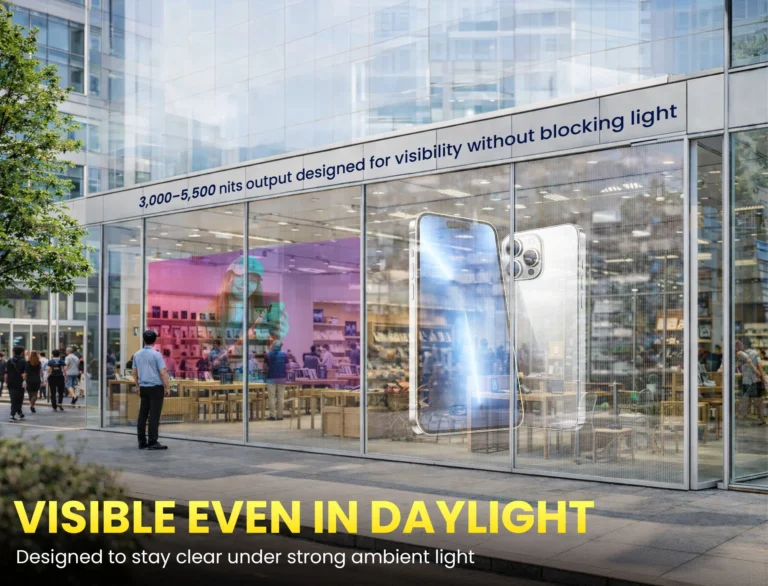
Commercial buildings are rapidly evolving beyond their traditional roles as office spaces, shopping centers, and corporate headquarters. In modern cities, buildings are increasingly becoming interactive communication platforms, capable of delivering information, branding, and visual experiences to large audiences.
One of the technologies driving this transformation is transparent LED film. While many people associate LED displays with large outdoor screens or digital billboards, transparent LED film offers something fundamentally different: the ability to turn ordinary glass surfaces into dynamic digital displays without sacrificing transparency.
Although the technology has already begun appearing in luxury retail stores and flagship locations, its true business potential in commercial buildings remains largely untapped. Office towers, business centers, airports, hotels, and shopping malls contain vast amounts of glass that could be transformed into powerful digital communication tools.
For property developers, building owners, and commercial tenants, transparent LED film represents not only a technological innovation but also a new revenue-generating asset hidden within existing architecture.
Over the past two decades, modern architecture has increasingly favored glass as a primary building material. Glass facades have become synonymous with innovation, transparency, and modern corporate identity. Skyscrapers, commercial complexes, airports, and shopping centers frequently feature expansive glass surfaces that define their visual character.
However, despite their architectural value, these glass surfaces often serve only a passive role. They allow natural light into buildings and provide exterior visibility, but from a business perspective, they remain largely underutilized assets.
At the same time, the demand for digital communication spaces in cities continues to grow. Businesses want new ways to promote their brands, deliver dynamic messaging, and capture attention in crowded urban environments.
Transparent LED film bridges this gap by transforming glass surfaces into functional digital media platforms without altering the architectural design.
Traditional LED displays require rigid structures, large installation frames, and dedicated mounting surfaces. These displays are effective but often intrusive, blocking windows and altering building aesthetics.
Transparent LED film works differently. It consists of ultra-thin flexible layers embedded with microscopic LED components, designed specifically to be applied directly onto glass surfaces.
Once installed, the film maintains a high level of transparency, allowing natural light to pass through the glass while displaying digital content when activated.
This technology offers several unique characteristics:
Because of these properties, transparent LED film enables buildings to integrate digital displays without compromising architectural integrity.
One of the most significant opportunities presented by transparent LED film lies in advertising and media revenue.
Commercial buildings often occupy prime locations with high foot traffic and strong visibility from busy streets. Their glass facades face thousands of pedestrians and vehicles every day, making them ideal surfaces for digital communication.
By installing transparent LED film on strategic areas of a building’s glass facade, property owners can convert previously unused surfaces into valuable advertising real estate.
Potential revenue models include:
Instead of relying solely on rental income from tenants, building owners can create new recurring revenue streams from digital media exposure.
In large urban centers, where advertising space is limited and expensive, these glass-based displays can become highly attractive to advertisers.
Transparent LED film also provides powerful branding opportunities for companies operating within commercial buildings.
Corporate headquarters, technology companies, financial institutions, and multinational firms often occupy entire floors or buildings. For these businesses, brand visibility is an important part of corporate identity.
Glass surfaces equipped with LED film allow tenants to display:
Instead of static signage, businesses can use dynamic visual storytelling to strengthen their brand presence in highly visible locations.
This technology is particularly valuable for buildings located in financial districts, innovation hubs, or high-profile urban areas where brand image matters.
Many commercial buildings contain retail spaces on lower floors, including restaurants, boutiques, technology stores, and showrooms.
Transparent LED film dramatically enhances the marketing potential of these retail environments.
Storefront windows can display animated digital content while still allowing customers to see inside the store. This combination of transparency and motion naturally attracts attention and increases foot traffic.
Retailers can use the technology to display:
Compared to static posters or banners, dynamic LED film displays create a more engaging visual experience that can significantly improve customer engagement and conversion rates.
The concept of smart buildings is becoming increasingly important in modern urban development. Smart buildings integrate digital technologies to improve efficiency, communication, and user experience.
Transparent LED film can play an important role in this ecosystem.
Building management teams can use LED-enabled glass surfaces to communicate important information, such as:
In large complexes such as airports, convention centers, and corporate campuses, this technology can significantly improve the flow of information while maintaining a clean and modern design.
Sustainability is an increasingly important factor in commercial building design. Many developers prioritize technologies that enhance energy efficiency and environmental performance.
Transparent LED film contributes to sustainable design in several ways.
First, the film consumes relatively low energy compared to traditional large LED billboards. Second, because it utilizes existing glass surfaces, it reduces the need for additional structural installations.
Additionally, buildings can integrate LED film displays into smart energy management systems, adjusting brightness levels based on ambient light conditions to reduce power consumption.
As cities move toward greener infrastructure, technologies that combine digital functionality with energy-conscious design will become increasingly valuable.
Urban environments are becoming more digital, connected, and interactive. Concepts such as smart cities, media architecture, and digital urban infrastructure are gaining attention among architects, developers, and city planners.
Transparent LED film fits naturally within these emerging trends.
Instead of adding more standalone digital screens to already crowded streets, cities can integrate communication technologies directly into existing architecture.
Glass buildings equipped with transparent displays can contribute to:
Over time, commercial districts may evolve into visually dynamic environments where architecture itself participates in the city’s digital communication network
While the opportunities are significant, successful implementation of transparent LED film requires thoughtful planning.
Building owners must consider factors such as:
Proper planning ensures that the technology enhances the building environment rather than overwhelming it.
Working with experienced installation specialists and digital signage experts is crucial for maximizing the technology’s potential.
Transparent LED film represents one of the most exciting innovations in modern commercial architecture. By transforming ordinary glass surfaces into dynamic digital displays, it unlocks a new layer of functionality hidden within existing buildings.
For commercial property owners, this technology offers far more than aesthetic appeal. It provides an opportunity to create new revenue streams, strengthen tenant branding, enhance retail marketing, and support smart building communication systems.
As urban environments continue evolving toward digital integration, transparent LED film is poised to play a major role in shaping the future of commercial buildings.
What was once simply glass may soon become one of the most valuable communication assets in modern cities.