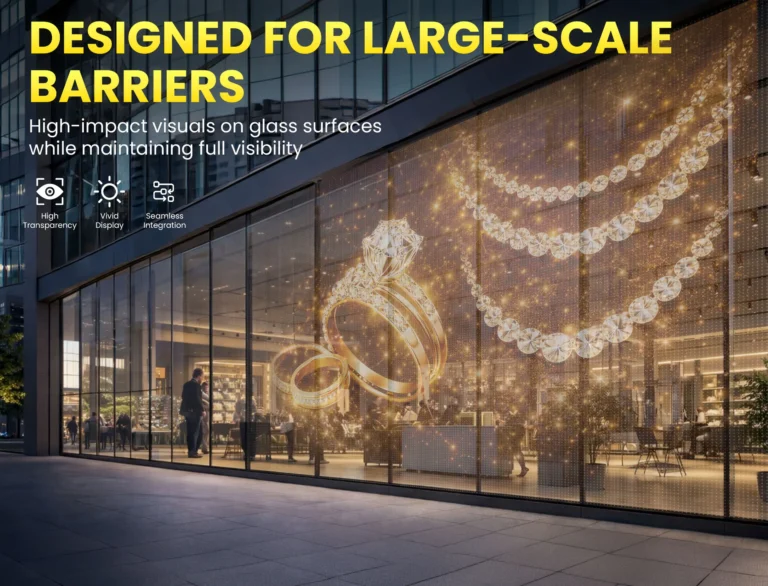
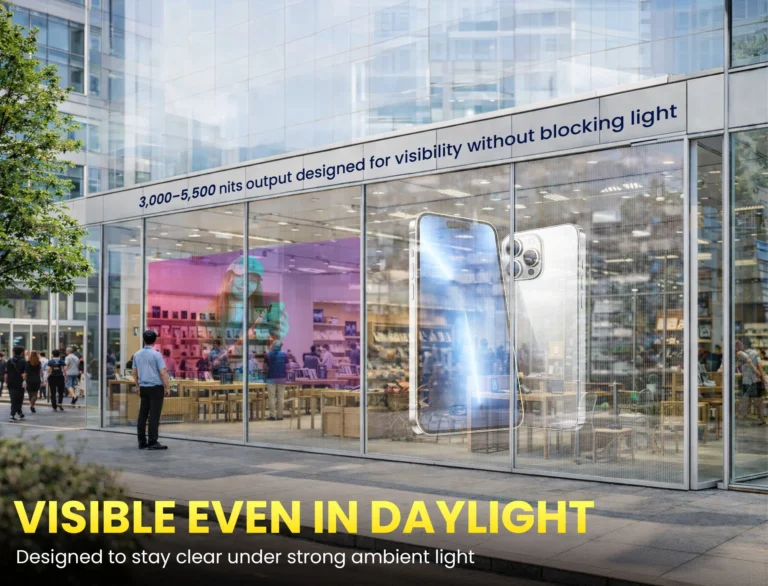
LED film technology is often evaluated by brightness, transparency, or resolution. While these technical elements are important, the true success of an LED film project depends on how well the installation is planned, integrated, and aligned with the space. In real-world applications, the difference between a strong installation and a less effective one is rarely about the product itself. It is about decisions made before, during, and after installation.
Understanding these factors helps businesses and project teams get the full value out of LED film on glass.
One of the most important yet overlooked aspects of LED film installation is the glass surface itself. The type of glass, its size, orientation, and role within the building all influence how LED film will perform. A successful installation begins by understanding how the glass is used during the day, how much natural light it receives, and how people interact with it.
When LED film is selected and positioned with these factors in mind, the result feels intentional and balanced. The glass continues to function as glass, while the digital layer enhances it. Installations that skip this evaluation often miss opportunities to maximize clarity, transparency, and overall visual comfort.
Strong LED film installations feel integrated, not added on. They align with the architecture, interior design, and flow of the space. Content placement respects sightlines, entrances, and movement patterns, ensuring that visuals enhance the environment rather than compete with it.
When integration is not carefully planned, LED film can still function, but it may feel disconnected from its surroundings. The most successful projects treat LED film as part of the spatial design, allowing it to support branding and communication without dominating the environment.
LED film is only as effective as the content displayed on it. Good installations consider content from the very beginning. This includes brightness levels, color choices, motion speed, and how visuals interact with transparency.
Content designed specifically for transparent displays feels lighter and more refined. It allows the background to remain visible and uses motion strategically rather than constantly. Installations that rely on generic screen content often fail to showcase the unique strengths of LED film, even when the technology itself is high quality.
Ambient lighting plays a major role in how LED film is perceived. Daylight, interior lighting, and nighttime conditions all affect visibility and contrast. A well-planned installation accounts for these changes and adjusts brightness and content accordingly.
When lighting is considered early in the process, LED film maintains clarity throughout the day without overwhelming the space. Installations that overlook lighting often require later adjustments that could have been avoided with proper planning.
The physical installation process directly impacts long-term performance. Clean application, precise alignment, and careful handling preserve transparency and ensure uniform visuals. When LED film is installed with attention to detail, it becomes nearly invisible when not in use.
Less effective installations are not necessarily incorrect, but they may lack the refinement that defines premium results. Small details in installation quality often separate projects that feel seamless from those that feel purely functional.
A successful LED film installation considers what happens after launch. Easy content updates, reliable performance, and minimal maintenance all contribute to long-term satisfaction. When systems are designed for usability, businesses can adapt messaging without technical barriers.
Installations that focus only on the initial setup may still work well, but they often limit flexibility over time. Planning for long-term use ensures that LED film remains a valuable asset rather than a static feature.
At VRsmart Glass, LED film installations are approached as complete solutions rather than standalone products. Each project begins with understanding the space, the glass, and the intended experience.
By focusing on integration, transparency, and real-world usability, VRsmart Glass ensures