Modern commercial spaces are no longer designed only to function — they are designed to impress, attract, influence, and stay memorable.
Airports want to create futuristic passenger experiences. Luxury boutiques aim to build emotional connections with customers. Flagship stores compete to become destinations rather than simple retail spaces.
In this new era of experience-driven architecture, visual technology has become one of the most powerful tools in design.
Among these technologies, LED film is rapidly becoming one of the most desired innovations in premium commercial environments.
Its ability to transform ordinary glass into transparent digital experiences is changing how brands communicate, how spaces feel, and how people interact with architecture itself.
Consumer expectations have changed dramatically over the last decade.
People no longer respond strongly to static advertising or traditional screens placed inside environments. Modern audiences expect spaces to feel immersive, intelligent, and visually dynamic.
This shift is especially visible in places where attention is everything:
These spaces are competing not only through products or services, but through experience.
LED film helps create exactly that.
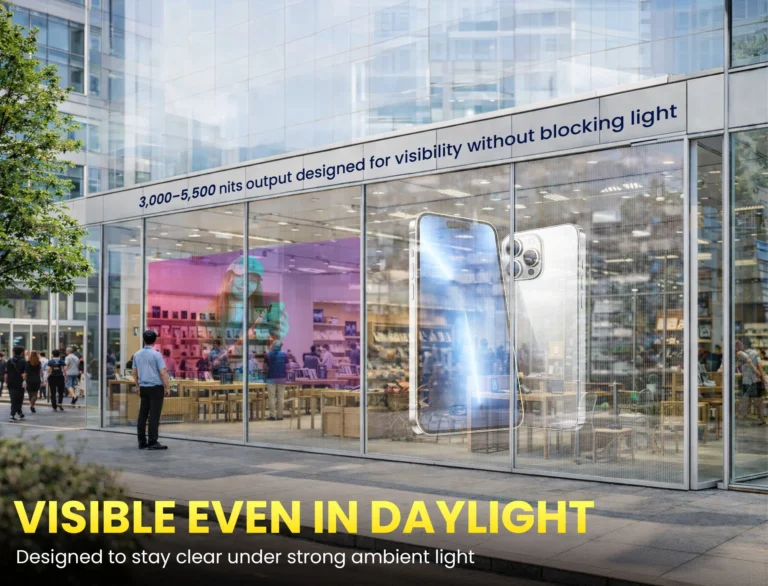
Unlike conventional LED screens, LED film integrates directly onto transparent glass surfaces while maintaining visibility and elegance.
This creates a completely different visual effect.
Instead of placing bulky displays into a space, LED film allows the architecture itself to become part of the visual experience.
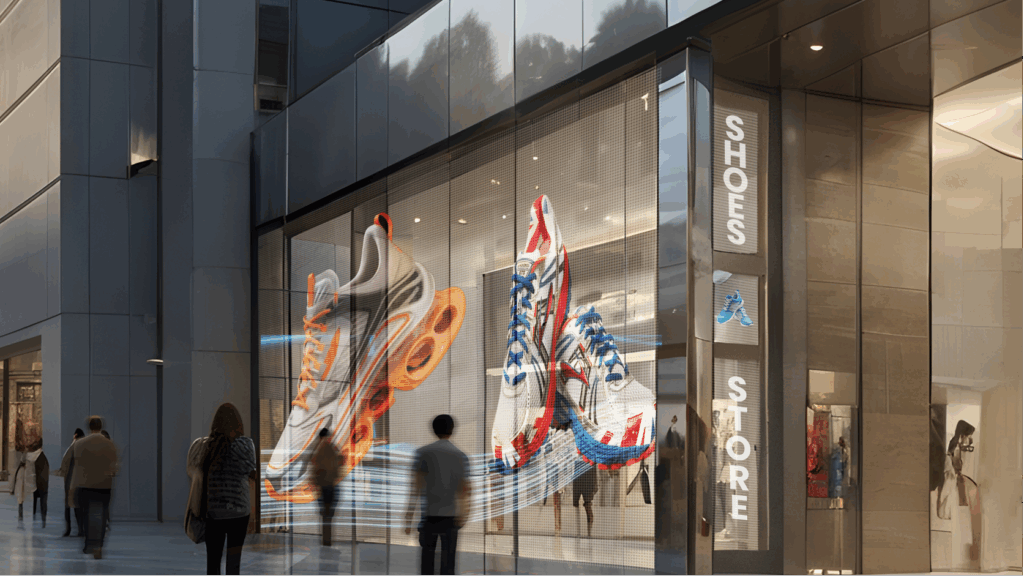
Glass walls, storefronts, windows, and partitions suddenly become dynamic communication surfaces capable of displaying:
All while preserving openness and modern aesthetics.
Airports are among the most competitive architectural environments in the world.
Modern airports are designed not only for transportation, but also for passenger comfort, luxury, entertainment, and brand identity.
LED film fits perfectly into this vision.
Travelers naturally associate innovation with quality.
When passengers enter terminals featuring transparent digital displays integrated into glass architecture, the entire environment immediately feels more advanced and premium.
LED film contributes to:
Rather than overwhelming travelers with heavy screens, LED film creates a lighter, more seamless digital environment.
Airports have evolved into major luxury shopping destinations.
Premium brands inside airports compete intensely for passenger attention, especially because travelers are constantly surrounded by visual stimulation.
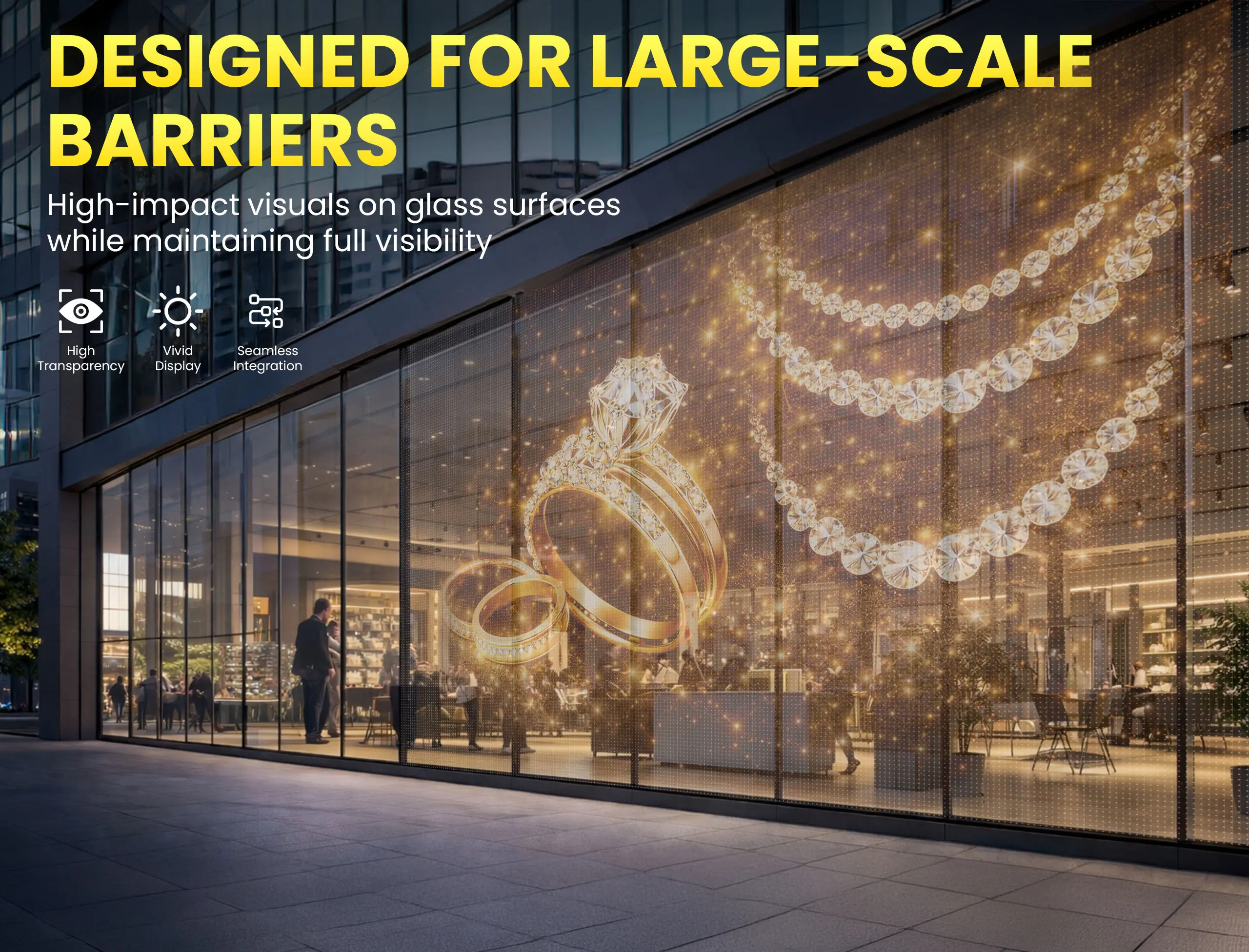
LED film gives luxury retailers a major advantage by turning storefront glass into moving brand experiences.
This allows boutiques to create:
Without blocking visibility into the store itself.
The result feels sophisticated rather than aggressive — a key element in luxury branding.
Luxury retail is built on emotion, exclusivity, and atmosphere.
Every detail inside a boutique contributes to how customers perceive the brand.
Traditional digital displays often feel disconnected from luxury interiors because they appear too industrial or visually heavy.
LED film changes this completely.
One of the biggest reasons luxury boutiques are obsessed with LED film is its ability to blend into architecture almost invisibly.
When inactive, the glass maintains a clean and elegant appearance.
When activated, it transforms into a dynamic digital surface without disrupting the minimalist atmosphere of luxury interiors.
This balance between technology and elegance is extremely valuable in premium retail design.
Luxury retail depends heavily on attention.
The most successful storefronts create moments that make people stop walking and look.
LED film is exceptionally effective at this because motion naturally attracts the human eye.
Subtle animations, cinematic visuals, and floating digital content displayed on transparent glass create a powerful sense of curiosity and exclusivity.
This transforms storefronts into experiences rather than simple display windows.
Modern luxury brands are not only selling products — they are selling identity, lifestyle, and emotion.
LED film allows brands to communicate these elements visually in a more artistic and immersive way.
Instead of relying on static posters or conventional displays, boutiques can create environments that feel:
This strengthens emotional connection between the brand and the customer.
Flagship stores are designed to represent the highest expression of a brand.
Every material, light source, surface, and visual element is carefully selected to communicate identity and prestige.
This is why flagship stores around the world increasingly integrate LED film into their architectural concepts.
LED film allows brands to communicate directly through architecture itself.
Instead of separating advertising from design, the building becomes part of the storytelling experience.
Glass facades can display:
This creates environments that constantly evolve while maintaining architectural elegance.
Modern commercial design is heavily influenced by social media culture.
People are naturally drawn toward spaces that feel visually unique and “shareable.”
LED film helps flagship stores create highly photogenic environments that encourage visitors to take photos and share experiences online.
This organic visibility becomes a powerful branding advantage.
In many cases, the space itself becomes part of the marketing strategy.
One of the most powerful aspects of LED film is emotional engagement.
Unlike traditional screens that simply display information, LED film feels integrated into the environment itself.
This creates experiences that feel:
The technology disappears into the architecture, allowing the experience to feel natural rather than mechanical.
Commercial architecture is evolving rapidly.
The most successful spaces are no longer defined only by physical design — they are defined by how they make people feel.
LED film aligns perfectly with this future because it combines:
All within a single transparent surface.
As brands continue competing for attention, differentiation, and unforgettable experiences, LED film is becoming far more than a display technology.
It is becoming part of the identity of modern commercial architecture itself.
Why are airports, luxury boutiques, and flagship stores obsessed with LED film?
Because modern spaces are no longer just spaces.
They are experiences.
LED film allows architecture to communicate, interact, and emotionally connect with people in ways traditional displays never could.
By transforming glass into immersive digital environments, the technology creates spaces that feel futuristic, elegant, and unforgettable.
And in a world driven by attention and experience, that transformation is incredibly powerful.