In modern architecture and digital marketing, glass has become one of the most widely used materials. From storefront windows to office partitions and building facades, glass creates open, bright, and visually appealing spaces. However, traditional glass surfaces are typically passive elements within a building’s design.
With the development of LED film technology, glass is no longer just a structural or decorative material. Instead, it can become an active communication surface capable of displaying dynamic digital content. This transformation allows brands, architects, and designers to turn ordinary glass into powerful storytelling platforms.
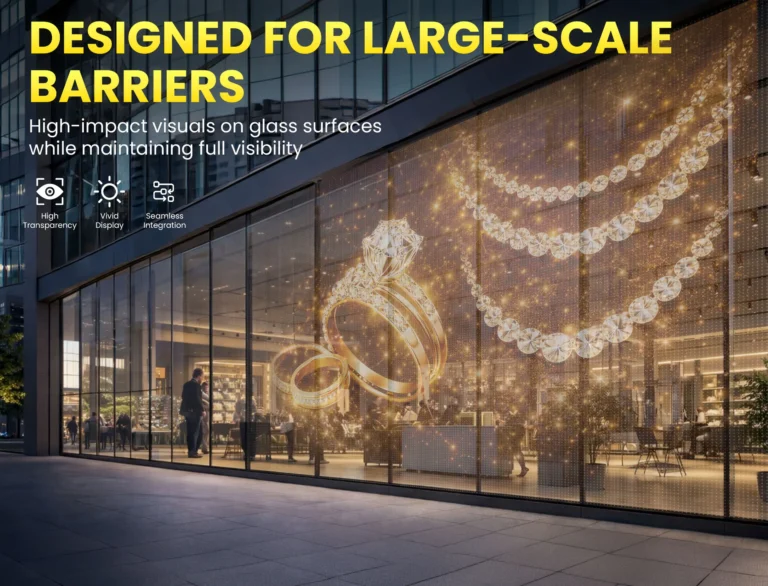
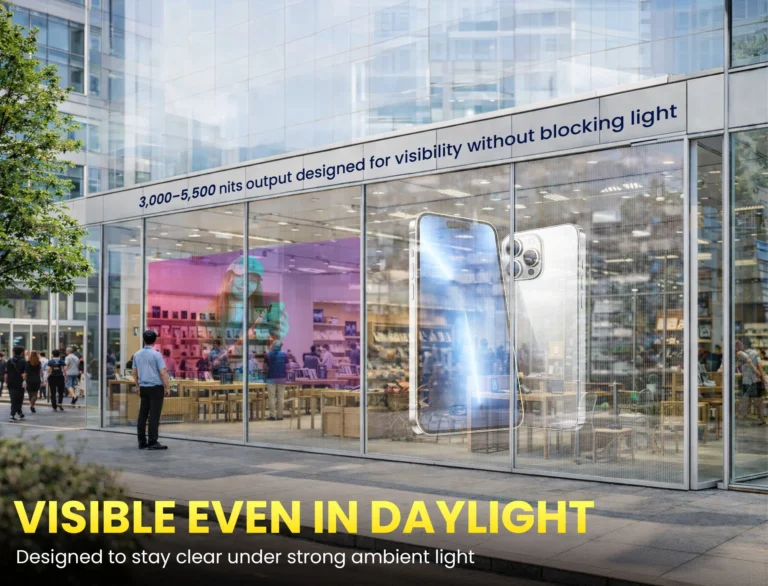
LED film combines transparency with high-quality digital display capabilities, enabling creative visual experiences without blocking natural light or the view behind the glass.
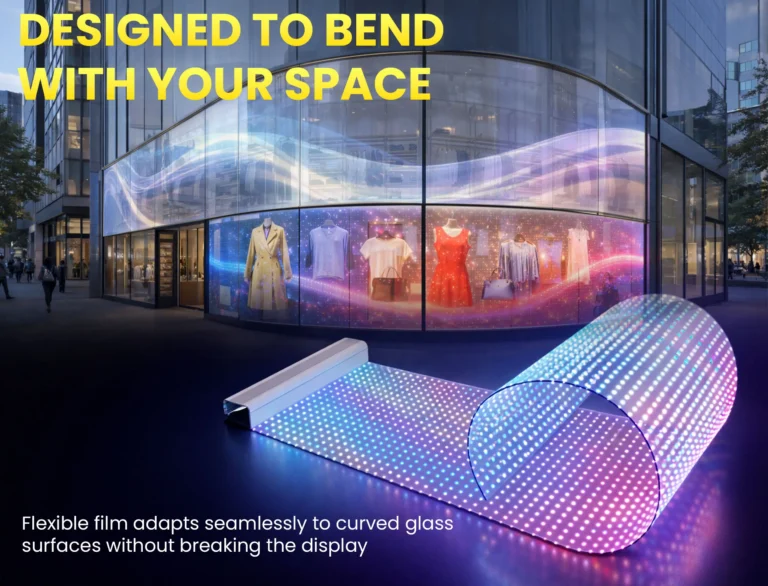
LED film is a transparent LED display that can be applied directly to glass surfaces. Unlike traditional LED screens, it does not require heavy panels or large display structures. The film is thin, lightweight, and flexible, allowing it to be installed on existing glass without major structural modifications.
One of its most valuable features is transparency. Even when digital content is displayed, people can still see through the glass, maintaining the openness of the architectural design.
This combination of digital media and transparency makes LED film an ideal tool for creative storytelling in physical spaces.
Retail storefronts are one of the most important visual communication points for brands. However, many stores still rely on static posters or simple product displays to attract customers.
LED film allows storefront glass to become a dynamic storytelling surface. Instead of static visuals, brands can display animated graphics, promotional videos, or seasonal campaigns directly on the glass.
For example, a fashion brand can show runway footage, styling inspiration, or brand narratives on its storefront windows while still allowing customers to see the products inside the store. This creates a visually engaging experience that captures attention and encourages people to enter the space.
Storytelling is not only about displaying information; it is also about creating experiences that connect emotionally with audiences.
LED film enables brands to design immersive environments where digital visuals interact with physical space. Glass walls, partitions, or windows can display animated content that enhances the atmosphere of a retail store, showroom, or event venue.
For instance, a technology brand might use LED film to display futuristic animations across glass surfaces during a product launch event. As guests move through the space, they experience the brand story visually and dynamically.
Beyond retail environments, LED film also opens new possibilities for architects and designers. Buildings themselves can become storytelling mediums.
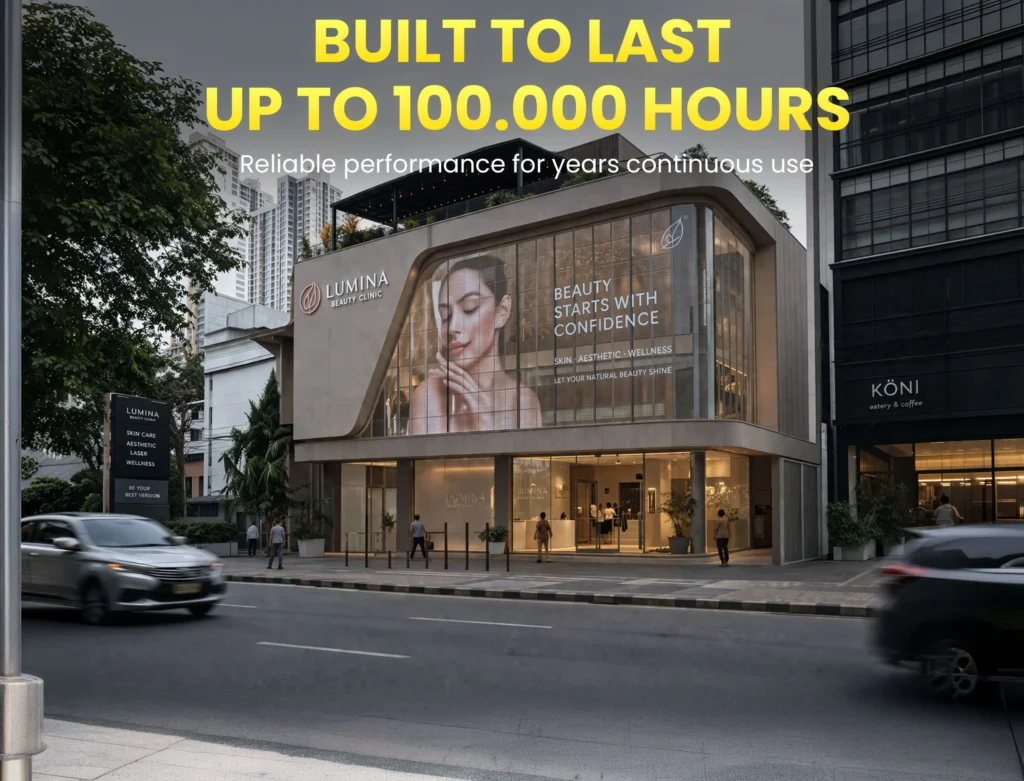
By applying LED film to glass facades or interior glass walls, designers can create structures that communicate visually with people outside and inside the building.
Corporate headquarters, cultural institutions, and public buildings can display visual content such as artistic animations, brand messages, or informational graphics directly on their glass surfaces.
This approach transforms architecture into a form of digital communication.
Events and exhibitions often rely on visual impact to create memorable experiences. LED film can transform ordinary glass structures into immersive media surfaces that enhance event design.
Exhibition booths, museum displays, and event installations can all benefit from LED film technology. Digital visuals displayed on glass create a modern and futuristic atmosphere while still maintaining the transparency of the structure.
This allows designers to combine physical objects, lighting, and digital content into a single cohesive storytelling environment.
As technology continues to evolve, the boundaries between architecture, media, and storytelling are becoming increasingly blurred. Physical environments are no longer static; they are becoming interactive and responsive.
LED film plays an important role in this transformation by turning glass into a digital storytelling surface. Instead of relying solely on traditional screens, designers can integrate digital content directly into the architecture of a space.
This approach creates more immersive environments where storytelling becomes part of the physical experience.
LED film is redefining how glass surfaces are used in modern design. By combining transparency with digital display capabilities, it transforms ordinary glass into a dynamic storytelling platform.
From retail storefronts and corporate buildings to exhibitions and events, LED film enables architects and brands to communicate visually in creative and engaging ways.
As digital media continues to integrate with physical environments, LED film will play a key role in shaping the future of architectural storytelling.