As cities around the world continue to embrace digital transformation, the concept of the smart city has become more than just a vision for the future—it is a reality shaping urban life today. Smart cities integrate advanced technologies to improve infrastructure, enhance public services, reduce energy consumption, and create better experiences for residents and visitors alike.
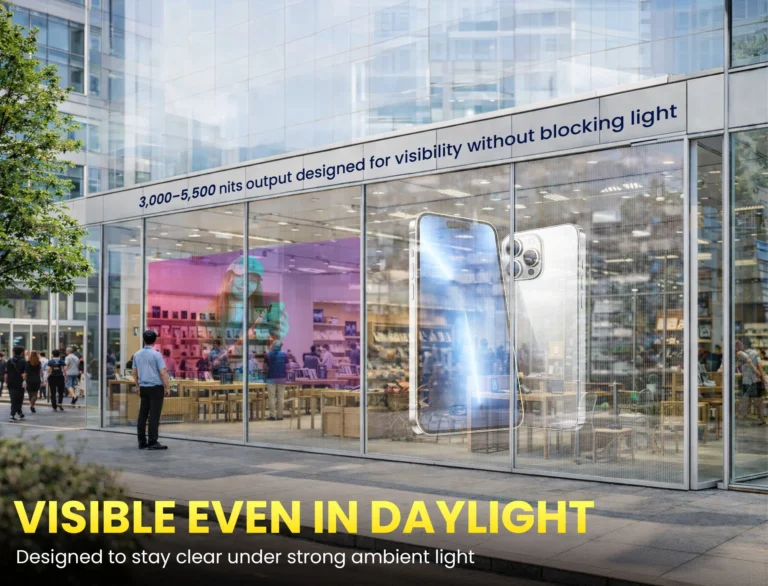
Among these innovative technologies, LED film is emerging as a powerful solution for modern urban environments. Unlike traditional LED displays, transparent LED film can be applied directly to existing glass surfaces, allowing buildings and public spaces to become dynamic communication platforms without sacrificing natural light or architectural aesthetics.
From transportation hubs and commercial buildings to museums, shopping centers, and government facilities, LED film is helping cities communicate more effectively while supporting sustainability and digital innovation.
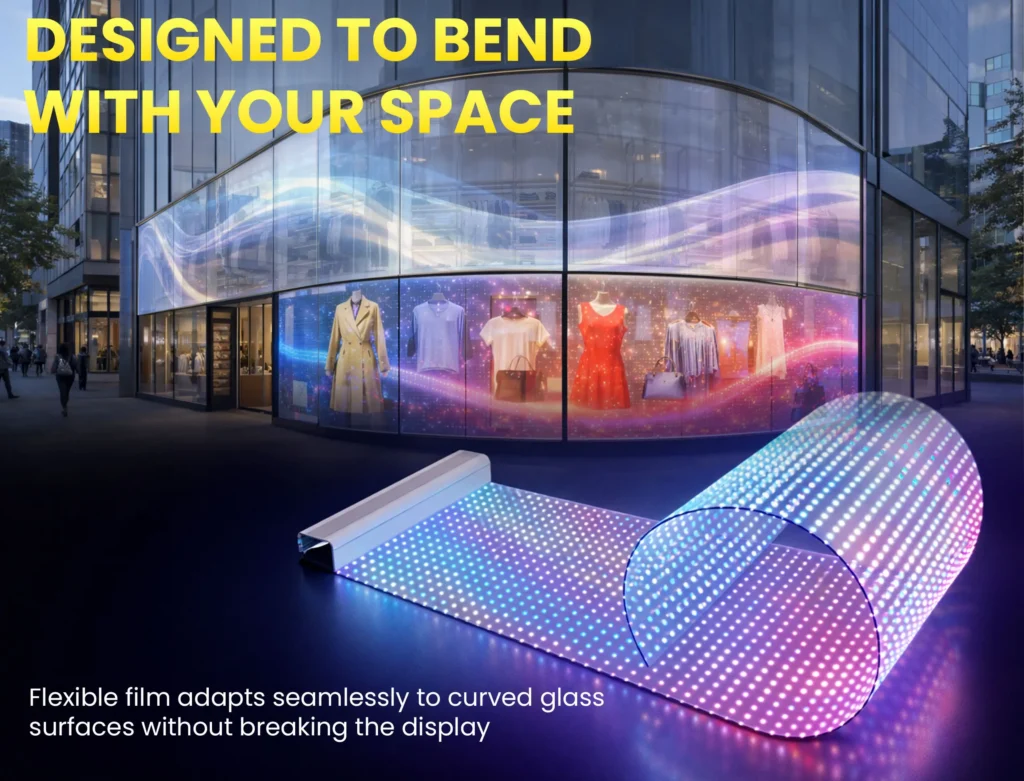
A smart city depends on technology that is efficient, adaptable, and visually appealing. LED film meets all of these requirements by transforming ordinary glass into transparent digital displays capable of delivering vibrant content without requiring major structural modifications.
Unlike bulky LED billboards, LED film preserves the transparency of windows while displaying advertisements, public announcements, emergency notifications, event promotions, or interactive digital content. This flexibility allows city planners and architects to incorporate digital communication into buildings without altering their original design.
Its lightweight construction and relatively simple installation also make LED film suitable for both new developments and retrofit projects, making it an attractive investment for growing cities.
One of the biggest challenges in modern cities is delivering timely information to thousands of people every day. LED film provides an innovative communication channel that integrates naturally into public spaces.
City authorities can display:
Because the displays are integrated into existing glass façades, information becomes highly visible without creating visual clutter.
Airports, train stations, metro systems, and bus terminals serve millions of passengers every year. Efficient communication in these environments is essential.
LED film can be installed on glass walls, entrance doors, waiting areas, and ticket offices to provide:
Since transparency remains intact, passengers can still maintain visibility throughout the facility while receiving important digital information.
Sustainability is one of the primary goals of every smart city initiative.
LED film contributes to greener cities in several ways.
First, many installations reuse existing glass rather than replacing entire façades with new digital structures. This reduces construction waste and material consumption.
Second, modern LED film technology is designed for energy efficiency. Compared with many traditional outdoor LED installations, transparent LED film often requires less structural support while providing impressive visual performance.
Finally, by digitizing advertisements and public notices, cities reduce the need for printed banners, posters, and temporary signage.
Smart cities are also economic centers where businesses compete for customer attention.
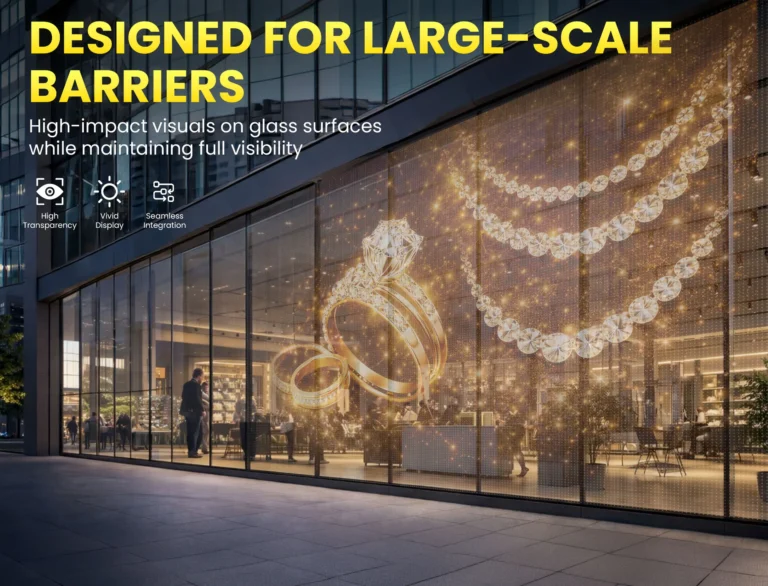
Retail stores, luxury boutiques, restaurants, shopping malls, and office buildings can use LED film to create engaging storefront displays without blocking visibility into their interiors.
Businesses can instantly update promotions, launch seasonal campaigns, showcase products, or display interactive multimedia content, all while maintaining a premium architectural appearance.
This combination of transparency and digital engagement helps brands attract more visitors without compromising the design of their buildings.
Modern architecture increasingly emphasizes glass façades, open spaces, and natural lighting.
Traditional LED displays often conflict with these design principles because they require large opaque panels.
LED film offers a different approach.
By adhering directly to glass, it transforms windows into digital media surfaces while preserving the clean, minimalist appearance architects strive to achieve.
For office towers, hotels, convention centers, and mixed-use developments, LED film creates opportunities for communication without sacrificing architectural identity.
Tourist destinations constantly seek innovative ways to engage visitors.
Museums, exhibition centers, historical buildings, galleries, and visitor centers can use LED film to display multilingual information, event schedules, interactive storytelling, and digital artwork.
Because the technology remains nearly invisible when inactive, it preserves the visual integrity of cultural landmarks while providing a modern visitor experience.
Smart cities require communication systems that remain effective during unexpected situations.
LED film can support emergency response by displaying evacuation instructions, weather warnings, public safety messages, or temporary traffic guidance across multiple locations.
Its ability to update content instantly allows authorities to distribute accurate information in real time, helping improve public awareness during emergencies.
Investing in LED film offers long-term economic advantages.
Cities can generate advertising revenue through digital displays while reducing maintenance costs associated with printed signage.
Businesses benefit from dynamic marketing campaigns that can be updated remotely within minutes.
Property owners increase the value of commercial buildings by incorporating advanced digital technologies that appeal to modern tenants and retailers.
These combined benefits make LED film not only a technological innovation but also a strategic investment.
As urban environments continue evolving, digital infrastructure will become increasingly interconnected through artificial intelligence, IoT devices, and real-time data analytics.
LED film is expected to become an integral component of these ecosystems.
Future developments may include personalized public information, interactive smart windows, AI-driven advertising, augmented reality integration, and automated content management systems that respond to traffic patterns, weather conditions, or local events.
The ability to seamlessly combine architecture, communication, and digital technology positions LED film as an essential solution for tomorrow’s cities.
Smart cities require technologies that improve communication, sustainability, and urban experiences without compromising architectural design.
LED film successfully meets these expectations by transforming ordinary glass into transparent digital displays capable of informing, engaging, and inspiring citizens.
Whether installed in transportation hubs, commercial buildings, public institutions, or cultural venues, LED film enables cities to communicate more effectively while supporting sustainable development and modern architectural aesthetics.
As smart cities continue to expand across the world, LED film is set to play an increasingly important role in shaping connected, efficient, and visually engaging urban environments.