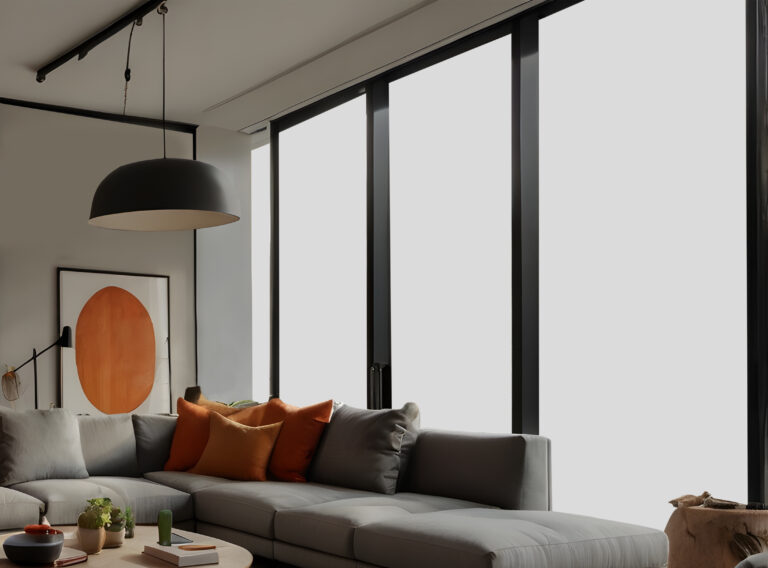
Glass Is No Longer Passive: The Rise of Intelligent Surfaces in Architecture
For decades, glass has been treated as a static architectural material. It framed views, allowed light to enter, and defined spatial boundaries—but it never actively participated in how a building functioned. Today, that understanding is rapidly changing. In contemporary architecture, glass is no longer passive. It has become an intelligent surface capable of responding to human needs, environmental conditions, and spatial demands in real time.
This shift reflects a broader transformation in how buildings are designed and valued. Architecture is moving away from fixed forms and toward adaptive systems. Intelligent surfaces, including smart film and dynamic glass technologies, are at the center of this evolution. They allow buildings to adjust, communicate, and perform rather than simply exist.
From Material to System
Traditional architectural materials are chosen for their physical properties: strength, transparency, insulation, or aesthetics. Intelligent glass surfaces add an entirely new layer—behavior. Instead of remaining in a single state, these surfaces can change opacity, control light transmission, and influence privacy on demand.
This evolution turns glass into a functional system rather than a passive envelope. Walls, partitions, and façades gain the ability to adapt throughout the day. Spaces can open up, close down, soften, or shield themselves without physical reconstruction. In this context, architecture becomes more fluid and responsive, aligning with how people actually use spaces rather than forcing users to adapt to fixed layouts.
Redefining Spatial Flexibility
One of the most significant impacts of intelligent glass is its effect on spatial planning. Modern buildings are expected to support multiple functions within the same footprint. Offices host meetings, collaboration, and focused work. Homes combine living, working, and relaxation zones. Hospitality spaces shift between openness and privacy throughout the day.
Intelligent surfaces enable this flexibility without visual clutter or mechanical complexity. Instead of adding walls, curtains, or dividers, designers can use glass that adapts instantly. This maintains openness while preserving the option for privacy or separation when required. As a result, spaces feel larger, cleaner, and more intentional.
Performance Meets Aesthetics
The rise of intelligent glass is not purely functional. Aesthetics play a critical role. Clean lines, uninterrupted surfaces, and minimalist detailing define contemporary architecture. Smart surfaces align naturally with this language because they eliminate the need for additional layers such as blinds or shades.
Visually, intelligent glass conveys sophistication and innovation. It signals that a building is designed with intention and foresight. This perception matters not only to users, but also to investors, tenants, and buyers who increasingly associate technological integration with long-term value and relevance.
Architecture That Thinks Ahead
Buildings are no longer judged solely by how they look on day one. Longevity, adaptability, and future readiness have become essential criteria. Intelligent surfaces contribute directly to this by allowing buildings to evolve without structural changes.
As architectural expectations continue to shift, passive materials will increasingly feel outdated. Intelligent glass represents a new baseline—one where surfaces actively contribute to comfort, efficiency, and experience. In this emerging paradigm, glass does more than frame architecture. It participates in it.