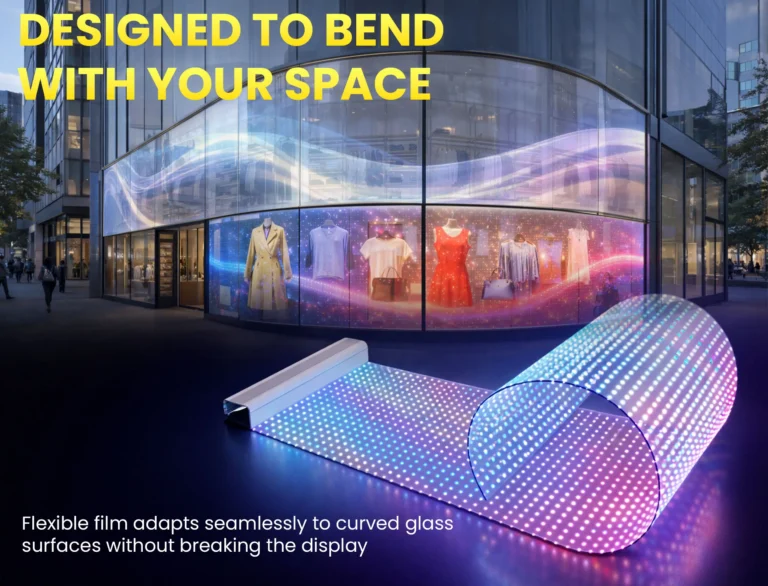
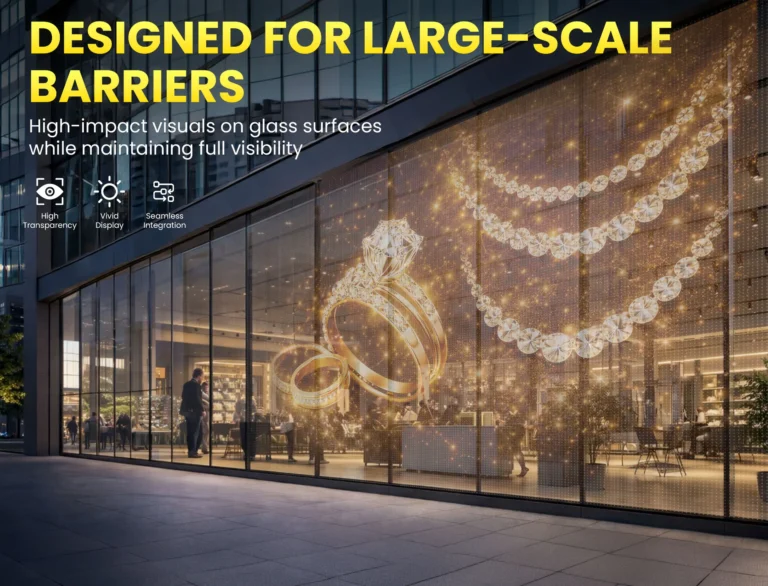
Transparent LED film is transforming architectural glass into a dynamic digital canvas. For brands like VR Smart Glass, this innovation represents more than visual appeal — it offers a new medium for communication, advertising, and modern facade storytelling. Yet, when the glass itself becomes the display, durability questions naturally rise. Architects and building developers increasingly ask whether LED film can withstand outdoor environments, seasonal shifts, and intense sunlight without compromising clarity or adhesion. This article explores those questions through performance fundamentals, environmental influences, and practical architectural deployment.
Transparent LED film is not an external LED screen. Instead of sitting in front of glass, LED film becomes part of the glass surface itself — maintaining transparency, natural light flow, and interior visibility. This difference is especially relevant for facade aesthetics, heritage buildings, high-end retail glass, and premium architectural projects where obstruction is unacceptable. Its micro-LED network emits light outward without blocking what sits behind it. For outdoor glass, this means the building retains its identity while gaining a digital skin, rather than appearing like a screen-covered structure.
Daylight visibility is one of LED film’s strongest advantages. Because the LEDs sit directly on the glass surface, visuals appear brighter and more saturated than rear-mounted or external screen solutions that compete with reflection and distance. Under peak sunlight, LED film maintains contrast better than traditional glass-backed digital signage. Storefronts and hotel window installations continue to deliver readable motion graphics, logos, and product visuals without losing vibrancy. This makes transparent LED film highly effective for commercial glass that faces direct sun during most hours of the day.
Rain & Humidity: LED film does not short-circuit from indirect moisture, but edges require sealing during installation to prevent long-term lifting in humid regions.
Temperature Cycles: Outdoor glass can shift dramatically between summer and winter. Adhesion stability is affected when glass expands and contracts, especially in continental or coastal climates.
Wind & Dust: Strong winds carry micro-vibrations to facade glass. Dust particles can reduce optical clarity on exterior surfaces, making cleaning schedules important.
Surface Stress: Outdoor glass facades are engineered for pressure loads. LED film must be applied without air bubbles or stress points to avoid uneven tension.
These conditions do not make LED film unusable outdoors — but they determine that architectural durability is an installation-led system, not only a material property.
Architectural windows naturally filter UV, especially when film is applied from the interior side. This gives LED film an advantage against yellowing or fading compared to fully exposed outdoor screens. Because LEDs emit light without needing a back panel, there is no heat build-up layer behind the glass that could accelerate discoloration. Still, long-term UV exposure on unfiltered exterior glass surfaces may gradually influence transparency films if installation lacks protective layering such as lamination or edge protection — not instantly, but over years depending on climate intensity.
The real protection of transparent LED film comes from:
Glass Surface Preparation: The cleaner, smoother, and chemically neutral the glass, the stronger the long-term adhesion.
Film Edge Sealing: Outdoor glass installations require perimeter isolation to prevent lifting from rain or humidity ingress.
Pressure-Free Application: Installation must avoid trapped tension, bubbles, or uneven pressure that could turn environmental stress into delamination.
Cable & Power Insulation: The film is not the vulnerability — exposed electrical endpoints are. Proper routing, insulation, and connector housing matter more than film thickness.
Glass-Integrated Protection: When film is placed behind facade glass or laminated glazing, it becomes dramatically more durable than external screen alternatives.
So in short: Transparent LED film is only as durable outdoors as the glass surface and installation system that carries it.
Architectural strategy improves durability without mentioning IP labels:
North or Angled Facades: Reduce direct solar stress while maintaining brightness.
Interior-Facing Glass: Protects film from rain and external abrasion while keeping outdoor visuals strong.
Double-Glazed Panels: Film sits protected between layers.
Retail Canopies & Overhangs: Reduce direct water edge exposure.
Conference & Lobby Glass: Outdoor visuals work perfectly when film stays on indoor glass instead of exterior.
Transparent LED film is an architectural innovation, not a weather-rated external screen product. It performs brilliantly under sunlight, maintains facade transparency, and integrates into premium glass aesthetics. For outdoor architectural glass, durability is driven by surface prep, sealing, placement strategy, electrical insulation, and maintenance discipline. When these factors are optimized, LED film becomes a powerful, long-lasting, and visually superior alternative for smart architecture.