LED Film in Architecture: Creating Intelligent and Interactive Glass Spaces
Technology has long played a visible role in architecture. Screens, panels, and digital installations were added as separate elements, often interrupting the purity of glass and form. Today, architectural technology is moving in a different direction—toward intelligence that is embedded rather than imposed.
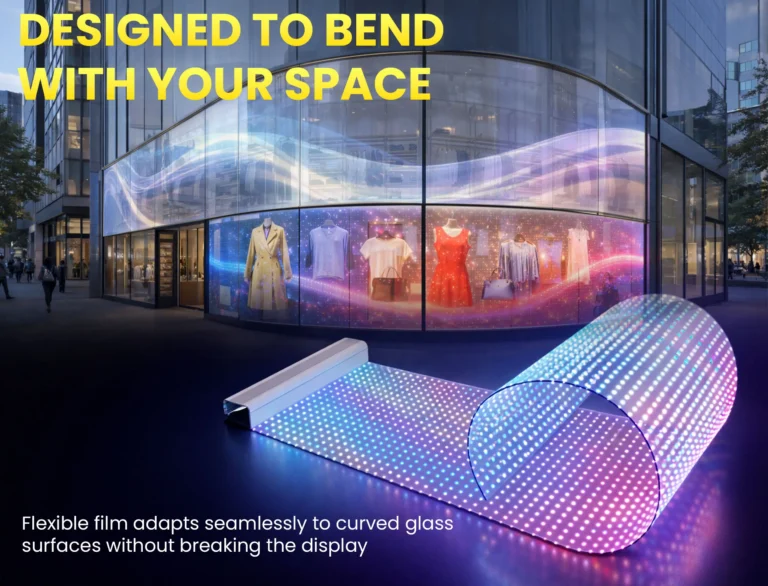
LED film introduces a new architectural approach by transforming glass itself into a communicative surface. Instead of adding screens to a space, it enables buildings to speak through the materials they already use. This shift marks the evolution of glass from a passive boundary into an active, responsive element.
Architecture That Responds
Traditional architecture is static. Even the most expressive buildings remain visually unchanged throughout the day. LED film introduces responsiveness into architectural design. Glass façades, partitions, and windows can now adapt to time, context, and purpose without altering structure.
Commercial spaces can shift their appearance from day to night. Office environments can display subtle information during working hours and return to transparency afterward. Architecture becomes capable of dialogue rather than declaration.
Intelligence Without Intrusion
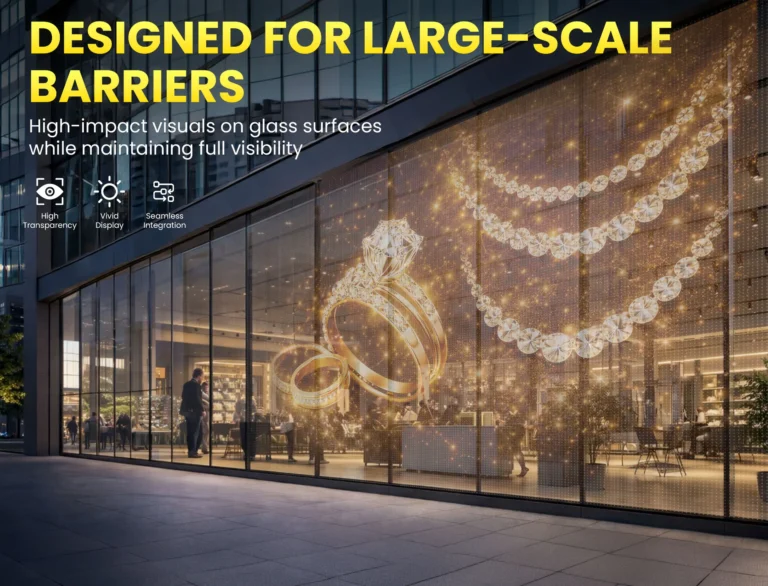
One of the defining characteristics of LED film is its invisibility. The technology integrates directly onto glass surfaces without frames, thickness, or visible hardware. When inactive, it preserves the original clarity of the glass. When active, it introduces content without dominating the space.
This level of integration aligns with modern architectural priorities, where technology is expected to enhance spatial experience rather than distract from it. Intelligence is no longer something that needs to be seen to be felt.
Creating Interaction Through Space
Interactive architecture does not always require touch or motion. Sometimes, interaction is simply the ability of a space to respond visually and contextually. LED film enables buildings to communicate information, mood, and identity in a way that feels spatial rather than digital.
This approach allows designers to create environments that feel alive, adaptive, and intentional—without compromising openness, daylight, or material integrity. Architecture remains architecture, enhanced by intelligence rather than reshaped by it.
As buildings continue to evolve, intelligence will be measured not by visibility, but by how seamlessly it integrates. LED film represents a future where architecture itself becomes the interface.