The Age of Invisible Technology: How LED Film Blends Display Into Architecture
Technology has traditionally demanded attention. Screens, devices, and hardware have always been visually present, often competing with architectural design rather than complementing it. Today, that relationship is changing. The most advanced technologies are no longer those that dominate space, but those that disappear into it.
Transparent LED film represents a defining moment in this transition. It introduces digital communication into architecture without adding physical bulk, visual noise, or structural disruption. Displays no longer sit on buildings—they become part of them.
When Display Stops Being an Object
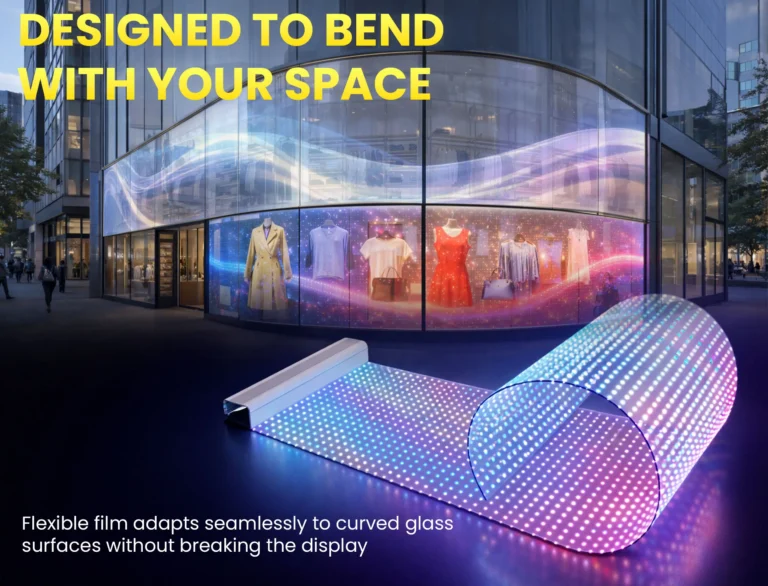
Conventional digital screens are objects. They occupy space, block views, and impose their presence on the environment. Transparent LED film challenges this paradigm by integrating directly onto glass surfaces, allowing content to appear while preserving transparency.
This shift transforms how digital information is experienced. Instead of looking at a screen, viewers engage with content that floats within architecture itself. Windows become communication surfaces without losing their primary function. The boundary between physical space and digital layer begins to dissolve.
A New Language for Architecture
Architecture has always communicated values—through form, material, and scale. LED film adds a dynamic layer to this language. Buildings can now express identity, information, and storytelling in real time, without altering their structure.
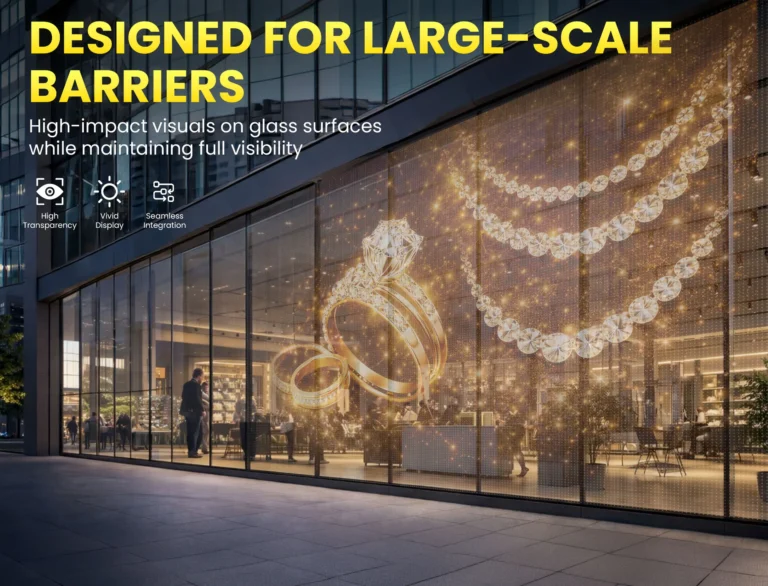
Retail façades can communicate brand narratives while remaining open and inviting. Corporate buildings can display subtle messaging without sacrificing elegance. Cultural and public spaces can evolve visually throughout the day. Importantly, this communication feels integrated rather than imposed.
Minimalism Through Integration
One of the greatest strengths of LED film is what it does not add. There are no frames, no bulky cabinets, no visible hardware dominating the façade. When inactive, the glass remains visually clean. When active, the content appears seamlessly.
This aligns perfectly with contemporary architectural minimalism, where technology is expected to enhance space without drawing attention to itself. Invisible technology does not compete with design—it reinforces it.
Digital Experience Without Compromise
Architects and developers often face a trade-off between visual communication and spatial quality. LED film removes that compromise. Transparency, daylight, and openness remain intact while digital capability is introduced.
This balance is particularly valuable in premium environments, where visual clutter can undermine perceived quality. By blending display into architecture, LED film supports a future where buildings communicate without sacrificing their architectural integrity.
As technology continues to evolve, visibility will no longer define innovation. Integration will. LED film represents a clear step into an era where digital presence is subtle, contextual, and architectural by nature.