The Invisible Screen: Integrating LED Film for Interactive Architecture
Architecture is evolving from static form to interactive experience. The next frontier in design is not just about how a building looks — but how it communicates. Enter LED film, the ultra-thin, transparent technology that’s turning glass surfaces into digital displays. This “invisible screen” is reshaping how architects, brands, and developers think about communication, engagement, and aesthetics.
What Is LED Film Technology?
LED film, also known as transparent LED display film, is a flexible and lightweight digital layer that can be applied directly onto glass surfaces. It allows video, animation, and graphics to be displayed without blocking transparency.
In simple terms — your window, wall, or partition can become a display when powered, and remain clear when not in use.
This innovation bridges the gap between physical architecture and digital interaction.
From Building Element to Communication Platform
Traditionally, architecture has been static — once built, it remains unchanged. LED film transforms glass into a dynamic communication medium.
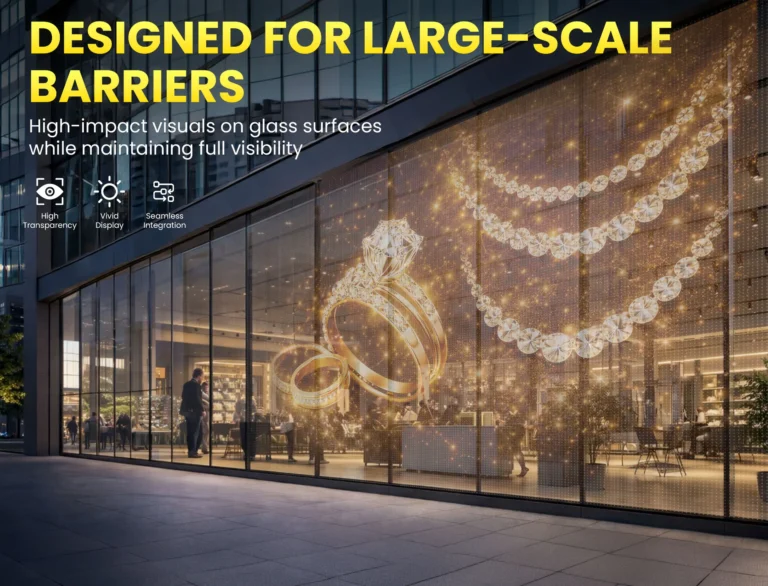
Retail and Showrooms: Brands can showcase products, messages, or promotions directly on storefront glass.
Corporate Buildings: Lobbies and meeting rooms can display information, logos, or ambient visuals.
Hospitality and Events: Hotels, restaurants, and exhibitions can create immersive environments without additional screens or structures.
In every case, LED film allows designers to merge digital storytelling with architectural elegance.
The Advantages of LED Film in Design
Preserved Transparency – Unlike traditional LED panels, LED film maintains visibility through the glass, keeping spaces open and bright.
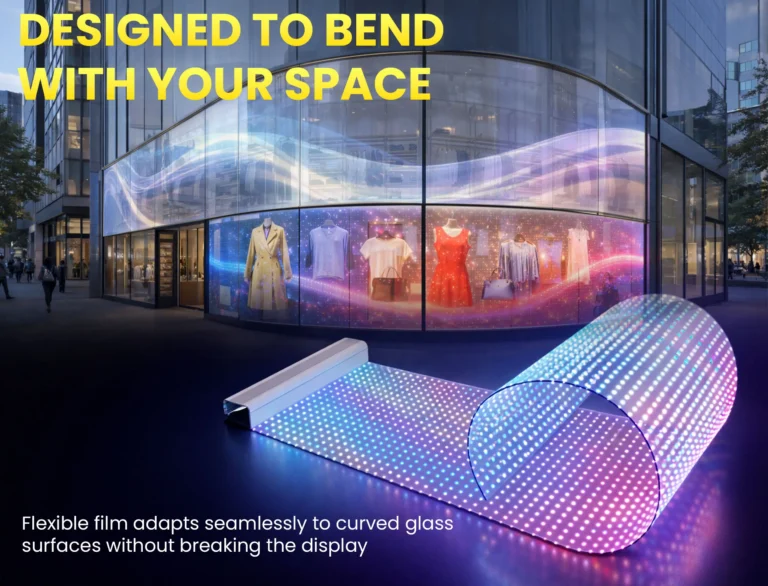
Flexible Installation – It can be applied to curved or irregular glass surfaces, expanding creative possibilities.
Energy Efficiency – Consumes less power compared to large LED screens, aligning with sustainable building goals.
Customizable Content – Easily programmable via software for real-time updates or interactive experiences.
Minimal Structural Impact – No need for bulky frames or equipment — the film integrates seamlessly with the architecture.
Interactive Architecture in Practice
Imagine walking through an airport where glass walls display real-time flight data. Or entering a hotel lobby where transparent walls greet you with personalized messages. LED film makes this level of interactivity possible — turning buildings into living interfaces.
For architects and developers, this technology opens a new design paradigm:
Façades that communicate,
Windows that inform,
Interiors that respond to movement and time of day.
The Aesthetic Revolution
Beyond functionality, LED film transforms how light, transparency, and motion interact. It enables digital minimalism — a design language where technology disappears into the material.
Instead of screens cluttering the space, LED film creates immersive surfaces that engage the senses subtly and elegantly. It’s not just innovation; it’s aesthetic intelligence.
Conclusion
As Smart Cities continue to evolve, transparent display technologies like LED film will play a crucial role in communication and sustainability. They support media architecture, where digital layers become part of urban identity, not separate from it.
LED film is redefining what’s possible in architecture — merging digital storytelling with spatial design. It allows brands and architects to create interactive, dynamic, and visually stunning environments without sacrificing transparency or form.
👉 At VR Smart Glass, we believe architecture should speak — and LED film is how it finally finds its voice.