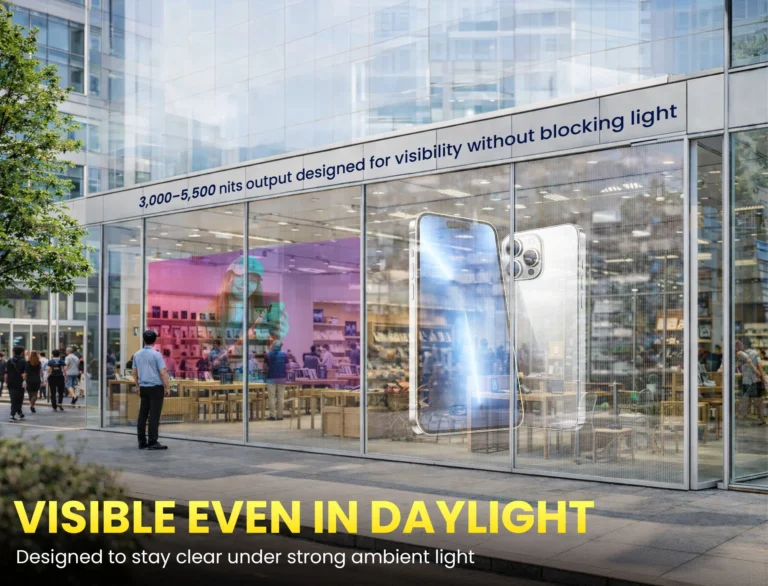
In modern architecture, the role of glass has evolved far beyond aesthetics. It’s no longer just about transparency and openness—it’s about interactivity, intelligence, and efficiency. As cities grow smarter and buildings become more connected, the integration of advanced materials like transparent LED film is redefining the future of design.
LED film offers architects, designers, and property developers an innovative way to transform ordinary glass into dynamic display surfaces—without compromising natural light, energy flow, or spatial harmony. This blog explores how LED film is being used to enhance the design, functionality, and sustainability of smart buildings worldwide.
Building façades have always served as the “face” of a structure—but what if they could also communicate with the environment? With LED film, architects can embed digital messaging, ambient information, or artistic visuals directly into the glass skin of buildings.
Whether displaying time, temperature, branded visuals, or interactive artwork, LED film turns the entire outer shell into a digital interface—without sacrificing transparency or energy efficiency. This makes it ideal for:
•Corporate headquarters
•Shopping centers
•Museums
•Hotels and high-end mixed-use developments
Real-world example: A financial institution can use its façade to show live market updates or social impact messaging during events, adding function to form.
Smart façades not only boost a building’s aesthetic appeal but also allow it to respond to its surroundings—offering a glimpse into the future of responsive architecture.
As sustainability becomes a key driver in construction, LED film provides powerful tools for smart light management. When combined with sensors or building automation systems, LED film displays can be programmed to adjust their brightness, opacity, or even content in response to natural light levels or time of day.
This integration reduces energy waste by minimizing overuse of HVAC and artificial lighting. For instance, during peak sunlight hours, an office tower can reduce internal glare and solar heat gain by displaying soft graphics or dimming opaque content via its LED glass walls.
Benefits include:
•Reduced energy consumption
•Lower cooling/heating costs
•Compliance with green building standards (e.g., LEED)
By working with building management systems (BMS), LED film becomes not just a display surface, but a strategic component of climate-responsive building design.
Inside smart buildings, LED film transforms glass partitions, conference rooms, and lobbies into multi-functional surfaces. From digital signage to dynamic dashboards, these transparent displays can convey useful information while maintaining open space aesthetics.
Offices can:
•Display meeting room availability
•Show interactive calendars or dashboards
•Run corporate branding or wellness messages
•Add privacy by dimming or displaying content as needed
This application is especially effective in co-working environments and tech campuses where adaptability and information flow are essential. The result is a high-tech workspace that still feels open and collaborative.
Bonus: The ability to turn glass “on” and “off” as a display preserves flexibility for design and functionality, adapting to changing team needs and event formats.
LED film is also being embraced in cultural and artistic spaces—such as museums, galleries, and public pavilions—where visual storytelling is central to the experience. By overlaying visuals on transparent glass, curators and designers can create layered narratives, ambient lighting effects, or interactive learning environments.
Examples include:
•Digital art that responds to motion
•Immersive storytelling on museum windows
•Ambient projections in architectural exhibits
Its unobtrusive presence allows the content to shine without overwhelming the space. At the intersection of art and technology, LED film is offering a new medium for creative expression.
You can control transparency levels, screen size, brightness, resolution, and even integration with smart home or building systems. Unlike bulky LED panels or video walls, LED film keeps your architecture clean and modern while enhancing functionality.
Creative freedom: A luxury car dealership can use curved glass walls embedded with LED film to showcase smooth vehicle animations that follow the contour of the building—blending innovation with elegance.
This level of customization allows your space to tell your story, exactly the way you want it told.
In high-end residential settings, LED film provides the “wow factor” that aligns with the expectations of luxury homeowners. From living room walls to panoramic windows, this technology turns passive glass into customizable digital experiences.
Real estate developers are using LED film in model homes and sales showrooms to:
•Display smart home controls
•Showcase lifestyle videos
•Add mood-setting animations or digital fireplaces
Imagine this: A luxury penthouse with floor-to-ceiling windows that subtly transform into a privacy screen with soft lighting visuals during the evening—without any curtains or mechanical shading.
In addition, residents can schedule displays, automate responses to lighting or temperature changes, and even integrate with their smart home ecosystems (like Apple HomeKit or Google Nest).
As the demand for intelligent, energy-efficient, and visually engaging environments grows, LED film technology stands at the forefront of architectural innovation. Its unique blend of form, function, and flexibility makes it a powerful tool for both aesthetics and performance.
From glass towers to boutique interiors, LED film is enabling the seamless fusion of digital design and sustainable construction. For architects and builders aiming to stay ahead of the curve, embracing this transparent revolution is no longer optional—it’s essential.
Want to see what LED film can do for your next project?
Contact VR Smart Glass to discover tailored solutions that align with your architectural vision and smart building goals.