In today’s fast-moving digital world, attention has become one of the most valuable currencies. Brands are no longer competing with each other—they are competing with everything that moves, shines, and captures the human eye. In this environment, traditional static displays are rapidly losing their impact.
Posters, printed visuals, and even conventional digital screens often fail to create the level of engagement that modern audiences expect. As consumer behavior evolves, so does the need for more dynamic, immersive, and visually striking communication tools.
This is exactly where LED film changes the game.
Static displays have been a cornerstone of advertising and visual communication for decades. They are simple, cost-effective, and easy to install. However, in today’s visually saturated environments, their limitations are becoming increasingly clear.
The main issue is simple: they don’t move.
Human attention is naturally drawn to motion. Our brains are wired to notice change, light, and movement. A static poster, no matter how well-designed, struggles to compete with dynamic visuals that instantly capture attention.
In busy retail streets, shopping malls, and commercial spaces, static displays often blend into the background rather than standing out.
Modern consumers expect more than just information—they expect experience.
Digital transformation has changed how people interact with brands. Social media, video content, and interactive platforms have raised the standard for visual engagement. As a result, static visuals can feel outdated and disconnected from today’s expectations.
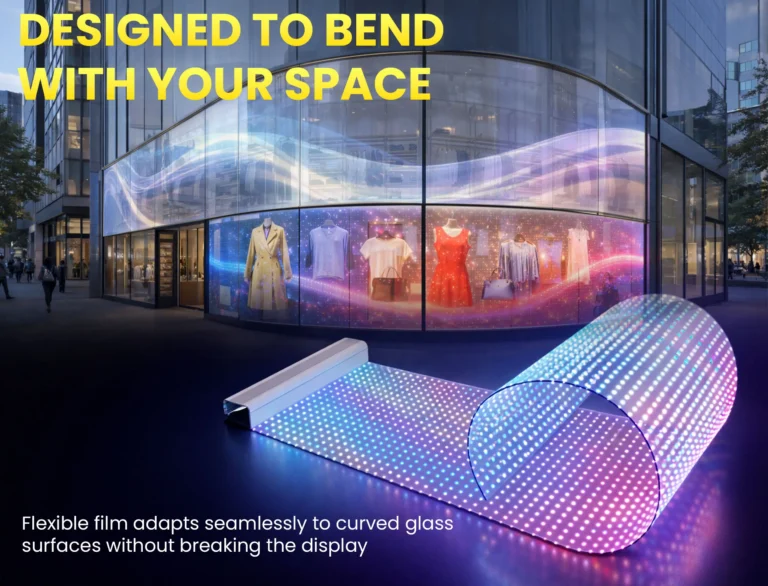
LED film introduces motion, light, and flexibility into physical spaces, transforming them into dynamic communication environments.
Instead of a single fixed image, brands can display:
This constant change keeps the content fresh and engaging, encouraging people to stop, look, and interact.
One of the biggest advantages of LED film is its ability to create movement without replacing the physical space.
When applied to glass surfaces, LED film turns ordinary windows into living displays. Content can flow, shift, and evolve throughout the day, capturing attention in ways static displays simply cannot.
For example, a storefront using LED film can:
This creates a sense of energy and life that static displays lack.
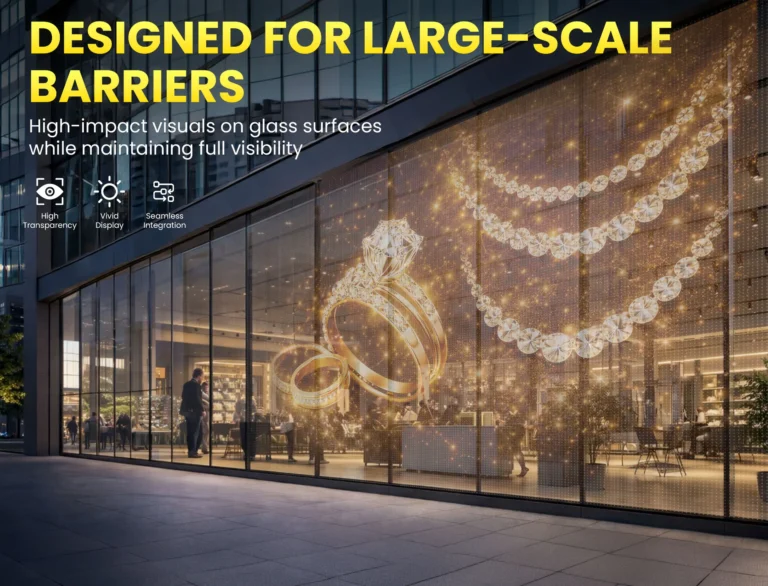
Unlike traditional LED screens, LED film maintains transparency. This means that while digital content is displayed, the space behind the glass remains visible.
This is a critical advantage in retail and architectural design.
Instead of blocking the view, LED film enhances it. Customers can see both the digital content and the physical products inside the store at the same time.
This dual-layer experience is far more engaging than a flat, static display.
Static displays are fixed. Once installed, they require physical replacement to update content.
LED film, on the other hand, is fully adaptable.
Content can be changed instantly without any physical intervention. Brands can update messaging based on:
This level of flexibility allows businesses to stay relevant and responsive in real time.
Perception plays a huge role in branding. A space that uses static posters can feel traditional—or even outdated.
In contrast, LED film instantly signals innovation, technology, and modernity.
It gives spaces a premium, high-tech feel that aligns with contemporary design trends. For customers, this creates a subconscious impression of a forward-thinking and innovative brand.
Static displays are passive. People see them, but rarely interact with them on a deeper level.
LED film transforms this experience into something more engaging. Moving visuals, layered content, and dynamic storytelling encourage people to pause, observe, and connect.
This shift from passive viewing to active engagement is one of the key reasons why LED film is becoming increasingly popular.
Static displays are not disappearing—but they are no longer enough on their own.
In a world driven by motion, interaction, and visual stimulation, brands need tools that can match the pace of modern attention spans.
LED film offers exactly that.
By combining transparency, motion, flexibility, and visual impact, it transforms glass surfaces into dynamic communication platforms. Compared to this level of engagement, static displays naturally begin to feel outdated.
As technology continues to reshape how we experience spaces, one thing is clear:
the future of visual communication is dynamic—and LED film is leading the way.