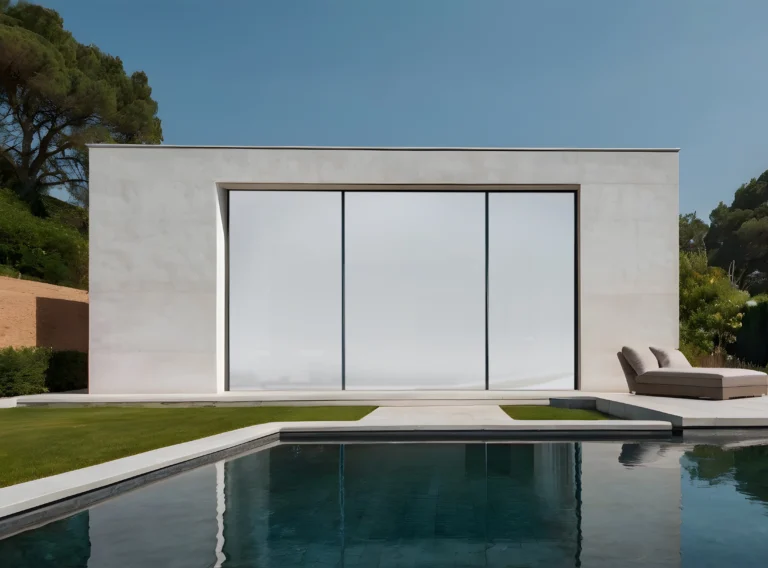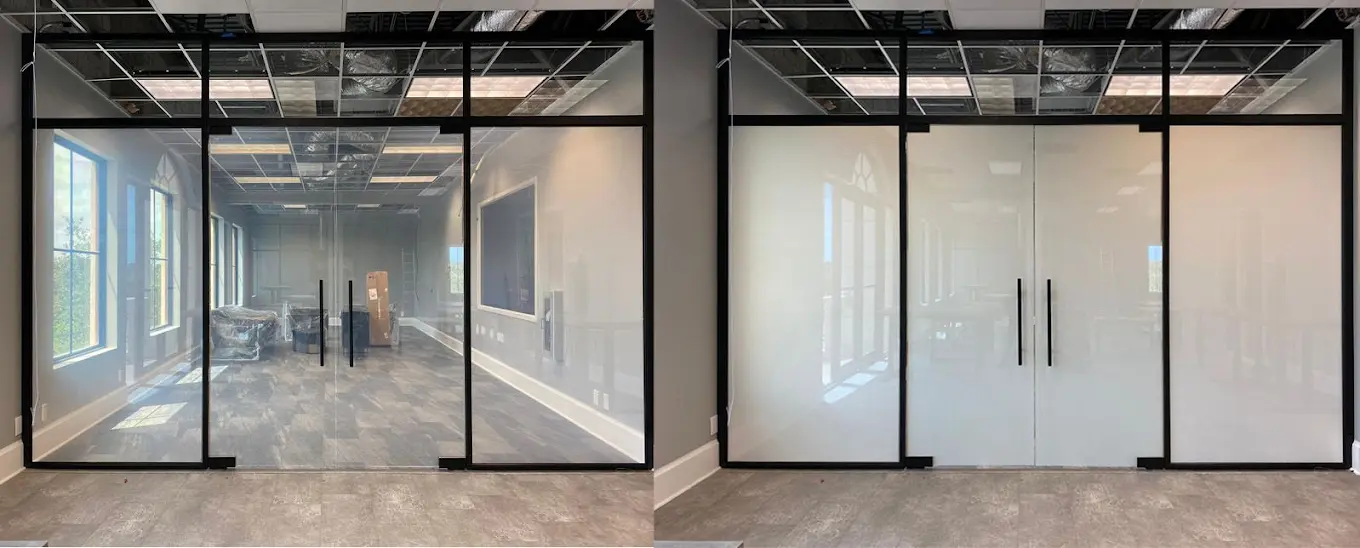

Smart film technology has transformed the way architects, business owners, and homeowners approach privacy, aesthetics, and energy efficiency. By allowing glass surfaces to switch from transparent to opaque at the touch of a button, smart films provide a modern and versatile alternative to traditional blinds, curtains, and privacy solutions.
However, not all smart films are the same. One of the most important decisions when selecting a smart film solution is choosing between Non-Adhesive Smart Film and Adhesive Smart Film. While both technologies offer similar privacy control capabilities, they differ significantly in installation methods, flexibility, maintenance requirements, and long-term applications.
This article explores the key differences between Non-Adhesive Smart Film and Adhesive Smart Film to help you determine which option best suits your project.
Smart film, often referred to as PDLC (Polymer Dispersed Liquid Crystal) film, uses liquid crystal technology to change the appearance of glass when electricity is applied.
When power is turned on, the liquid crystals align, allowing light to pass through and making the glass transparent. When the power is turned off, the crystals scatter randomly, causing the glass to appear opaque and providing instant privacy.
Both adhesive and non-adhesive smart films operate using the same fundamental technology. The primary differences lie in how they are installed and where they are best utilized.
Adhesive Smart Film is designed with a self-adhesive backing that allows it to be permanently applied to existing glass surfaces.
The installation process is similar to applying a large window film. Once attached to the glass, the film becomes a semi-permanent part of the glazing system.
Key Characteristics of Adhesive Smart Film
Common Applications
Non-Adhesive Smart Film is an innovative smart glass solution that does not rely on adhesive layers for installation. Instead, it is designed for applications where removability, flexibility, and simplified installation are priorities.
Because the film is not permanently bonded to the glass, it can often be removed, replaced, or repositioned more easily than adhesive alternatives.
Key Characteristics of Non-Adhesive Smart Film
Common Applications
Adhesive Smart Film Installation
Installing adhesive smart film requires precise alignment and application techniques. The installer must carefully clean the glass surface, remove contaminants, and apply the film without introducing air bubbles or imperfections.
Since the film permanently adheres to the glass, mistakes during installation can be difficult and costly to correct.
Non-Adhesive Smart Film Installation
Non-adhesive smart film offers a more flexible installation process. Because it does not rely on permanent bonding, adjustments can often be made more easily during installation.
For projects requiring frequent modifications or future upgrades, this flexibility can provide significant advantages.
One of the biggest advantages of Non-Adhesive Smart Film is its adaptability.
Building owners often face changing needs over time. Office layouts evolve, tenants move, and design preferences change. A privacy solution that can be removed or replaced without damaging glass surfaces can offer substantial long-term value.
Adhesive smart film is generally better suited for installations intended to remain in place for many years without modification.
Adhesive Smart Film
If damage occurs, replacing adhesive film may involve removing the bonded layer and installing a new film. This process can require additional labor and time.
Non-Adhesive Smart Film
Replacement is often simpler because the film is not permanently attached. This can reduce maintenance costs and minimize downtime in commercial environments.
Cost Considerations
The total cost of ownership involves more than just the initial purchase price.
Factors to consider include:
While project-specific pricing varies, Non-Adhesive Smart Film may offer long-term savings for organizations that anticipate future modifications or relocations.
Best Applications for Adhesive Smart Film
Adhesive Smart Film is often the preferred choice when:
Best Applications for Non-Adhesive Smart Film
Non-Adhesive Smart Film is often ideal when:
••Easy maintenance and replacement are priorities
Sustainability is becoming an increasingly important factor in modern construction and interior design.
Because Non-Adhesive Smart Film can often be removed and reused in certain applications, it may contribute to reduced material waste compared to solutions that require complete replacement during renovations.
Additionally, both smart film types can help reduce reliance on traditional blinds and curtains while supporting daylight management strategies.
There is no universal answer because every project has unique requirements.
Choose Adhesive Smart Film if:
Choose Non-Adhesive Smart Film if:
••You are working with temporary or leased spaces.
Both Adhesive Smart Film and Non-Adhesive Smart Film provide the advanced privacy control, modern aesthetics, and technological sophistication that make smart glass solutions increasingly popular worldwide.
However, the choice ultimately depends on your project’s goals. Adhesive Smart Film delivers a secure and permanent installation, while Non-Adhesive Smart Film offers unmatched flexibility, easier maintenance, and adaptability for evolving spaces.
As smart glass technology continues to advance, Non-Adhesive Smart Film is becoming an increasingly attractive option for architects, designers, property managers, and businesses seeking versatile privacy solutions that can evolve with their needs.