
Modern architecture is no longer only about creating visually attractive spaces. Today, buildings and interiors are expected to be smarter, more adaptive, energy-efficient, and experience-oriented. As technology continues to influence the way people live and work, smart architectural systems are becoming an essential part of contemporary design.
Among the most innovative technologies transforming modern spaces today are Smart Glass Solutions.
From luxury homes and corporate offices to hotels, hospitals, airports, and commercial buildings, Smart Glass Solutions are redefining how people experience privacy, comfort, transparency, and interaction within architectural environments.
These advanced technologies combine aesthetics with functionality, creating spaces that feel modern, intelligent, and future-ready.
Smart Glass Solutions refer to advanced glass technologies designed to improve functionality, flexibility, and user experience in architectural spaces.
Unlike traditional static glass, smart glass systems can dynamically adapt to changing conditions and user needs.
Depending on the system used, Smart Glass Solutions can provide:
These intelligent systems transform ordinary glass surfaces into multifunctional architectural elements.
The demand for intelligent environments is increasing rapidly across the world.
Architects, designers, and businesses are looking for technologies that offer both high performance and premium aesthetics without compromising modern design principles.
This is exactly why Smart Glass Solutions are becoming one of the most valuable innovations in contemporary architecture.
Modern spaces are expected to adapt to different situations throughout the day.
A conference room may need openness during collaboration and privacy during meetings. A luxury bathroom may require instant privacy without sacrificing natural light. A storefront may need to shift from transparency to digital display functionality.
Smart Glass Solutions make these transformations possible instantly and seamlessly.
This flexibility creates spaces that feel more dynamic, responsive, and technologically advanced.
Minimalist design remains one of the strongest trends in modern architecture.
Traditional solutions such as curtains, blinds, and partitions often interrupt the clean lines and openness of contemporary interiors.
Smart Glass Solutions eliminate this problem by integrating functionality directly into the glass itself.
This creates cleaner, more elegant, and more sophisticated environments.
Modern architecture increasingly focuses on how spaces make people feel.
Smart Glass Solutions contribute to environments that feel:
This emotional and visual impact is one of the key reasons why smart glass technology is rapidly expanding across multiple industries.
There are several types of Smart Glass Solutions available today, each designed for different architectural and commercial applications.
Switchable Privacy Glass
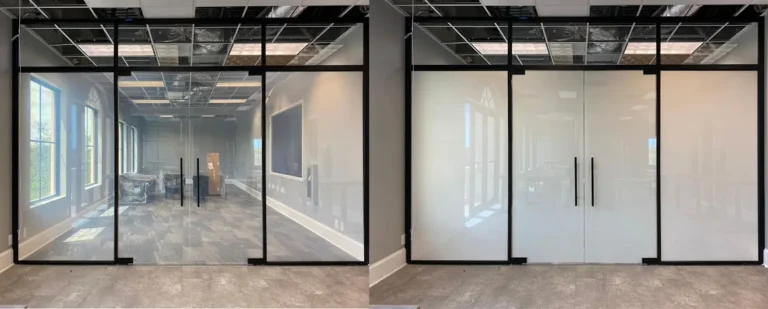
Switchable privacy glass is one of the most popular Smart Glass Solutions.
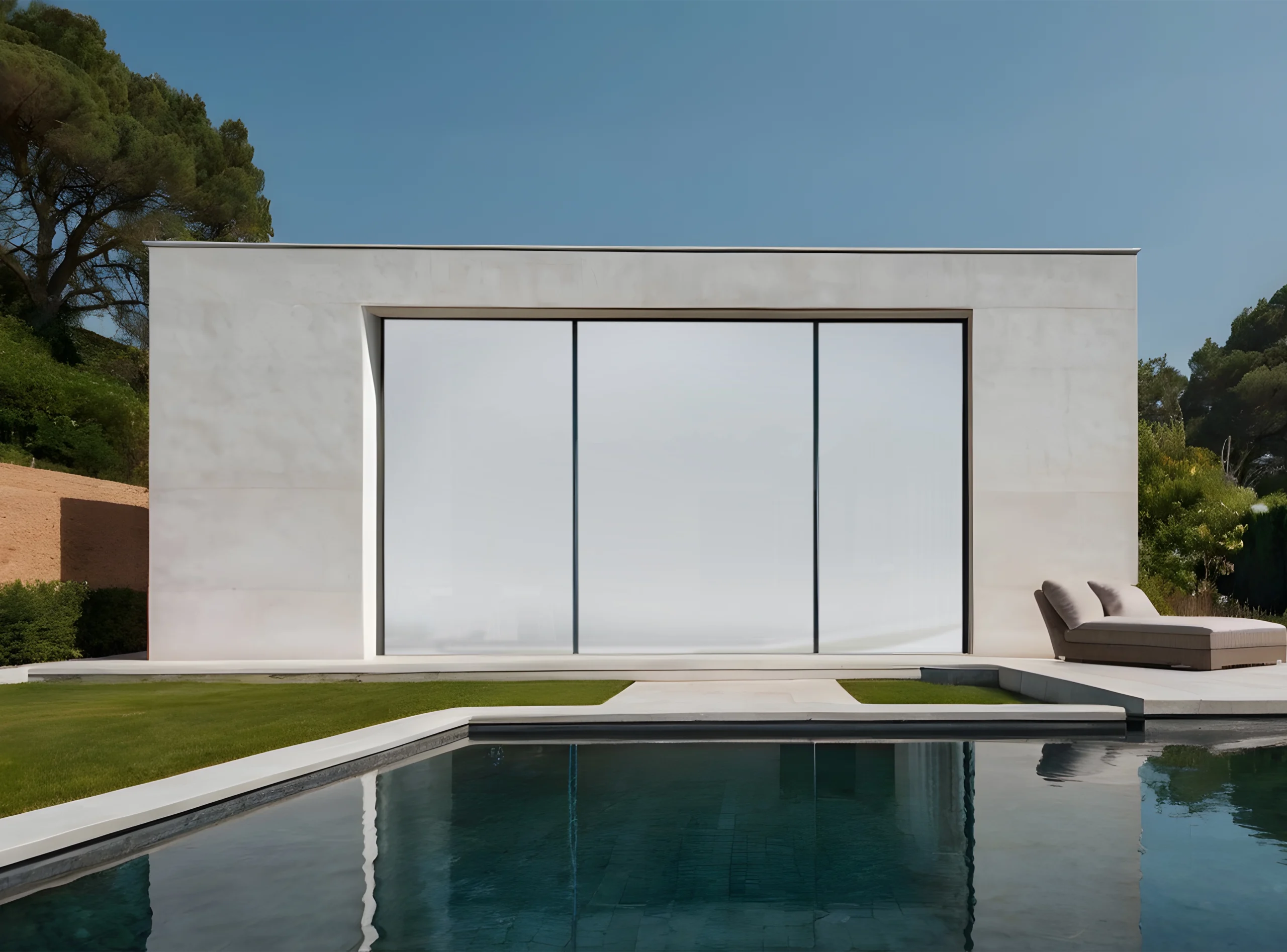
This technology allows glass surfaces to instantly switch between transparent and opaque states with electrical activation.
It is commonly used in:
Switchable glass combines elegance, privacy, and functionality in a highly modern way.
Smart Film Solutions
Smart film technology allows existing glass surfaces to be upgraded without replacing the entire glass structure.
This makes smart film one of the most practical and cost-effective Smart Glass Solutions for renovations and interior upgrades.
Smart film enhances both privacy and modern aesthetics while maintaining architectural simplicity.
LED Integrated Glass Solutions
LED-integrated Smart Glass Solutions combine transparent glass with digital display technology.
These systems transform glass surfaces into interactive communication platforms capable of displaying:
LED glass technologies are widely used in:
These solutions create immersive and futuristic architectural experiences.
One of the biggest advantages of Smart Glass Solutions is their versatility.
They can be integrated into many different industries and environments.
Corporate Offices
In modern workplaces, Smart Glass Solutions help create:
These features support productivity while maintaining openness and contemporary design.
Hospitality and Hotels
Luxury hotels increasingly use Smart Glass Solutions to improve guest experiences.
Smart privacy systems, interactive glass surfaces, and adaptive interiors create environments that feel more personalized, elegant, and technologically advanced.
Healthcare Facilities
Healthcare environments benefit greatly from Smart Glass Solutions.
Instead of traditional curtains or blinds, hospitals and clinics can use intelligent glass systems to create cleaner, more hygienic, and more calming environments.
Retail and Commercial Spaces
Modern retail focuses heavily on customer experience and visual engagement.
Smart Glass Solutions help brands create attention-grabbing storefronts and interactive commercial environments that strengthen brand identity and customer interaction.
Beyond aesthetics and functionality, Smart Glass Solutions also contribute to sustainable architecture.
Advanced smart glass systems help regulate sunlight, reduce glare, and improve indoor temperature control.
Benefits include:
As sustainable construction continues growing globally, Smart Glass Solutions are becoming increasingly important in modern building design.
The future of architecture is becoming increasingly intelligent, connected, and adaptive.
Smart Glass Solutions are expected to evolve alongside:
Future buildings will not simply contain technology — they will actively respond to human behavior and environmental conditions.
Smart glass technology represents one of the most important innovations leading this transformation.
Smart Glass Solutions are transforming modern architecture by combining technology, flexibility, elegance, and user experience into intelligent architectural systems.
Whether used for privacy, energy efficiency, aesthetics, or digital interaction, Smart Glass Solutions create spaces that feel more innovative, adaptive, and future-oriented.
As architecture continues moving toward smarter and more experience-driven environments, smart glass technologies are becoming far more than a design trend.
They are becoming the future of modern living and intelligent architecture.