
In today’s retail and hospitality industries, attention has become one of the most valuable currencies in the world. Consumers are surrounded by endless advertisements, digital screens, social media content, and visual distractions every second of the day. Because of this, traditional advertising methods are rapidly losing their ability to create meaningful impact.
Modern brands are no longer competing only through products or services. They are competing through experience, atmosphere, visual identity, and emotional connection.
This shift is transforming how physical spaces are designed — and more importantly, how glass surfaces are being used.
What was once considered a simple architectural element is now becoming one of the most powerful advertising mediums in modern commercial environments.
Transparent LED Film technology is leading this transformation.
By turning ordinary glass into dynamic digital displays without sacrificing transparency or aesthetics, smart glass advertising is redefining how retail stores, hotels, restaurants, and luxury commercial spaces communicate with customers.
The future of advertising is no longer limited to walls and billboards.It is happening directly on glass.
For decades, storefront windows and glass facades were designed primarily for visibility and aesthetics. Today, businesses are beginning to realize that these surfaces hold far greater potential.
Glass exists everywhere in modern architecture:
Instead of leaving these surfaces passive and unused, businesses are now transforming them into intelligent communication platforms.
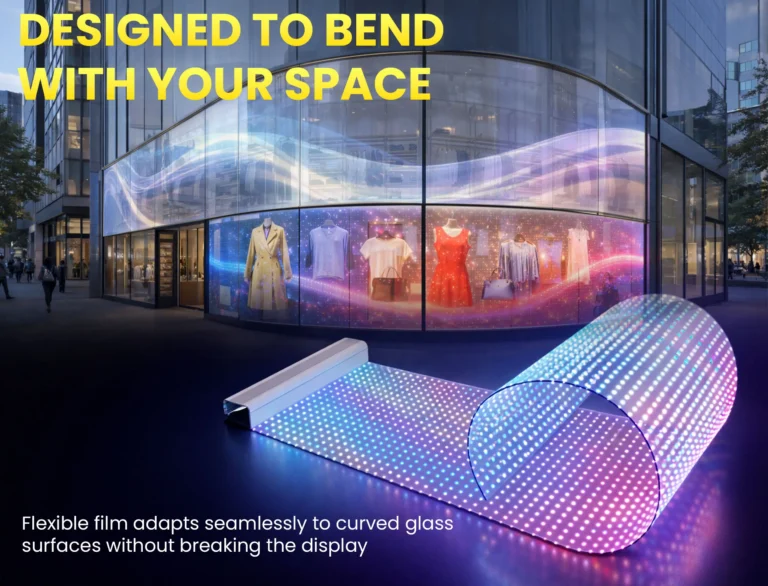
Transparent LED Film makes this possible by allowing digital content to appear directly on glass while still maintaining visibility through the surface itself.
This creates something traditional displays cannot achieve: a balance between openness, natural light, architectural elegance, and immersive advertising.
For premium brands especially, this balance is critical.
Bulky LED screens often interrupt architectural aesthetics and create visual heaviness. Transparent LED Film introduces a far more sophisticated solution — one that feels integrated into the architecture itself rather than added on top of it.
Static storefront displays are becoming outdated.
Modern consumers expect movement, interaction, and immersive visual experiences. A printed poster or traditional sign can easily disappear into the background of a busy commercial environment.
Dynamic digital visuals, however, naturally attract human attention.
Transparent LED Film allows businesses to transform storefront glass into living digital experiences capable of displaying:
Unlike conventional screens, these visuals appear almost as if they are floating on glass.
This futuristic effect creates immediate curiosity and dramatically increases visual engagement from passing customers.
For retailers, this means storefronts can continue working even after business hours — attracting attention, strengthening brand identity, and influencing customer perception 24/7.
Luxury retail is built on perception.
Every detail inside a premium retail environment is carefully designed to communicate exclusivity, sophistication, and innovation. Traditional advertising methods often fail to match the visual standards expected in luxury spaces.
Transparent LED Film solves this problem by merging digital technology with architectural elegance.
High-end fashion boutiques, jewelry stores, automotive showrooms, and flagship retail locations are increasingly adopting transparent display technology because it creates a premium futuristic atmosphere without compromising interior visibility.
Instead of covering storefronts with heavy promotional materials, brands can now create elegant visual experiences directly on glass surfaces.
This allows luxury retailers to maintain minimalistic architectural aesthetics while still delivering powerful advertising campaigns.
The result is a cleaner, more modern customer experience that feels immersive rather than aggressive.
The hospitality industry is also undergoing a major transformation.
Hotels, restaurants, rooftop lounges, and luxury venues are no longer focused only on service quality. They are increasingly focused on creating memorable visual experiences that guests associate with the brand itself.
Transparent LED Film introduces entirely new possibilities for hospitality environments.
Hotels can use transparent displays in lobby glass walls to create digital art experiences or branded visual environments.
Restaurants can display elegant motion visuals, menu promotions, or ambient digital content directly on windows without blocking exterior views.
Luxury venues can transform glass partitions into dynamic storytelling surfaces during events or presentations.
This technology creates a unique fusion between architecture, lighting, atmosphere, and digital communication.
For hospitality brands seeking to stand out in competitive markets, this creates a powerful emotional advantage.
Human attention naturally reacts to movement, light, and visual contrast.
Traditional printed advertising remains static. Over time, customers become visually accustomed to it and begin ignoring it completely.
Transparent digital displays create a different psychological effect.
Because the visuals appear directly on transparent surfaces, the experience feels unexpected and futuristic. This element of surprise immediately increases attention levels.
Customers are naturally drawn toward displays that feel innovative and visually different from their surroundings.
In high-traffic environments such as shopping malls, luxury retail districts, airports, and hospitality venues, this attention advantage can significantly increase brand visibility and customer engagement.
One of the most important shifts happening today is the fusion between architecture and digital communication.
In the past, advertising was often added onto buildings as a separate element.
Today, technology is becoming integrated into architecture itself.
Transparent LED Film represents this evolution perfectly.
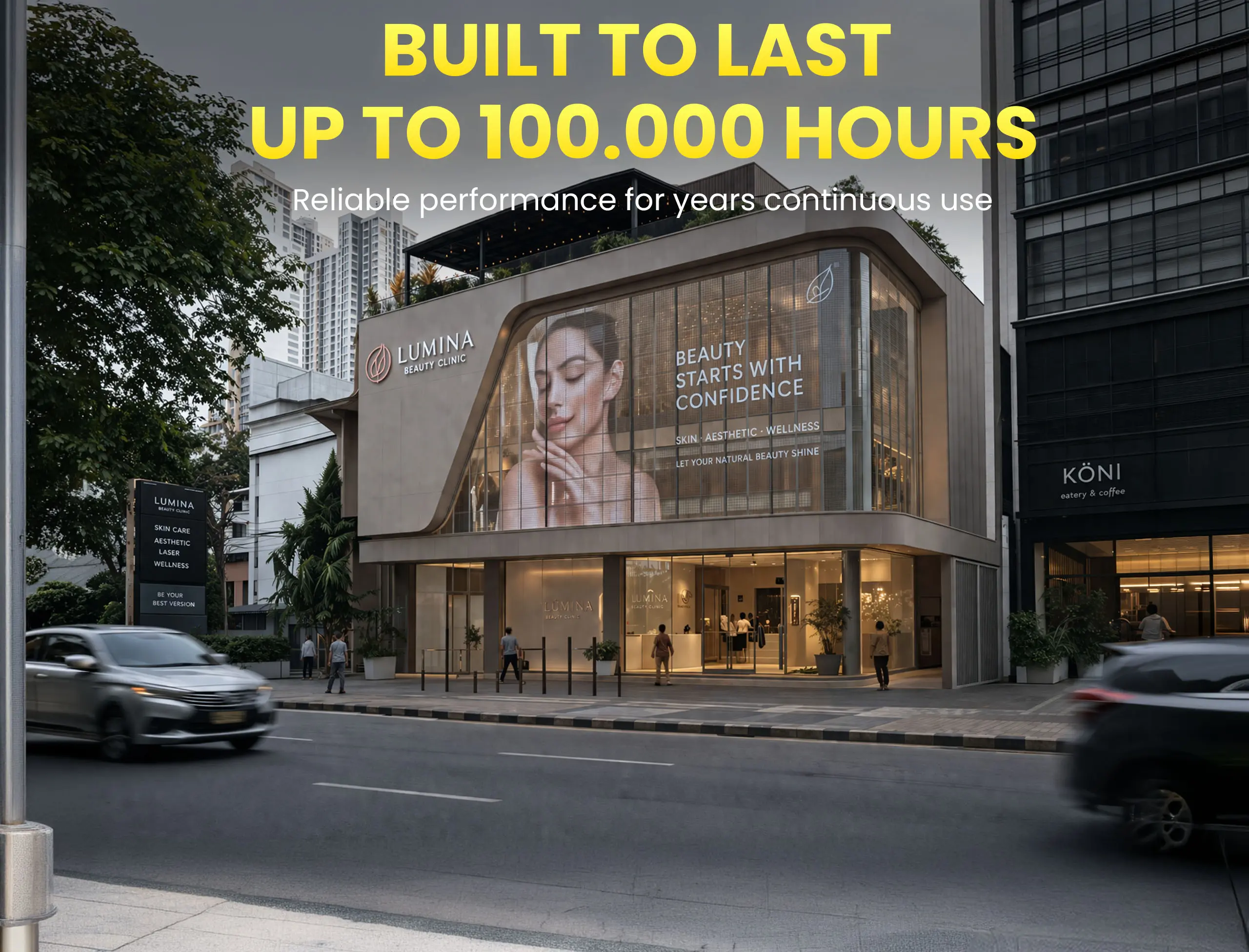
Instead of installing massive external displays, businesses can now transform existing architectural glass into seamless digital communication surfaces.
This creates cleaner building aesthetics, more efficient use of space, and a far more futuristic customer experience.
As smart buildings and intelligent commercial environments continue evolving, transparent display technology is expected to become a defining element of modern architecture.
Retail and hospitality industries are entering a new era where experience matters more than ever before.
Businesses that successfully combine architecture, technology, and emotional engagement will become the brands that dominate customer attention in the future.
Transparent LED Film is not simply another advertising tool.
It is a new way of transforming physical space into immersive digital communication.
For brands seeking innovation, elegance, and stronger customer engagement, smart glass advertising is no longer a futuristic concept.
It is already becoming the future of modern commercial environments.