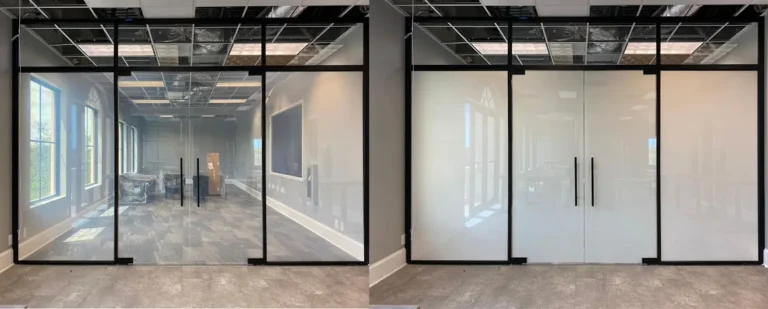
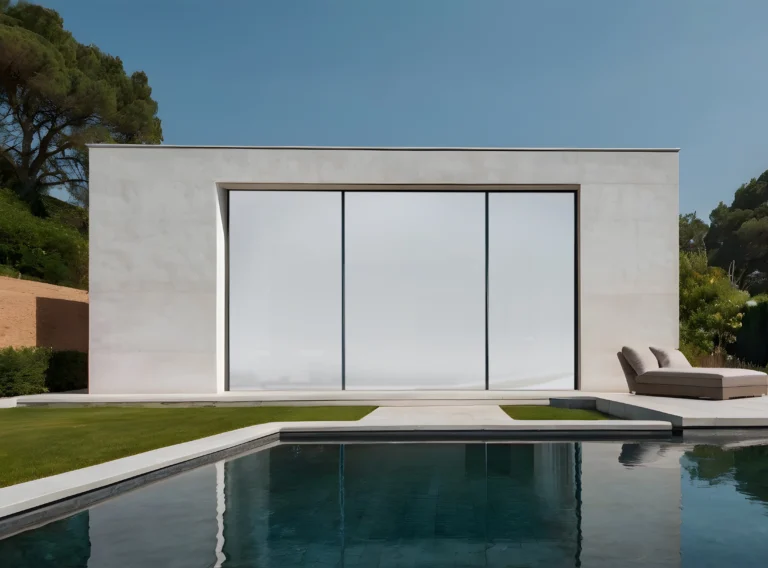
Smart film technology is no longer positioned as an optional upgrade or a visual gimmick. It has become a functional design element that reshapes how spaces operate, adapt, and respond to real-world needs. While often associated with privacy control, the true value of smart film lies in its ability to combine flexibility, efficiency, and architectural clarityinto a single solution.
Across different industries—residential, commercial, retail, hospitality, and healthcare—smart film delivers value in distinct yet interconnected ways. Understanding where and how this value emerges is key to recognizing smart film not as a product, but as a strategic architectural tool.
In high-end residential projects, privacy is not negotiable—but neither is design integrity. Traditional privacy solutions such as curtains, blinds, or permanently frosted glass often introduce visual clutter, limit natural light, or lock the space into a single function.
Smart film eliminates these compromises.
Instead of relying on static elements, homeowners gain on-demand privacy that preserves openness when desired and provides full opacity instantly when needed. This capability transforms how spaces are used:
The value of smart film in luxury homes is not only about privacy—it is about control without permanence. Spaces no longer need to be designed around fixed privacy solutions. Instead, privacy becomes a dynamic layer that adapts to lifestyle, time of day, and personal preference.
This aligns perfectly with modern luxury, where technology is expected to enhance comfort without being visually dominant.
Office environments today face a constant challenge: balancing transparency and confidentiality. Open-plan layouts encourage collaboration, but sensitive meetings, executive discussions, and focused work still require privacy.
Smart film resolves this conflict without architectural redesign.
Meeting rooms, boardrooms, and executive offices can shift between transparent and private states instantly. This allows:
Unlike blinds or curtains, smart film does not age visually, break mechanically, or require frequent adjustment. It integrates directly into the glass itself, supporting clean design and long-term reliability.
For organizations, the value lies in operational flexibility—spaces that adapt to changing needs without downtime or renovation costs.
In retail, visibility is strategic. What customers see—and when they see it—directly influences perception and purchasing behavior. Smart film introduces a new level of control over this dynamic.
Retailers and showrooms use smart film to:
Glass transitions become part of the customer journey rather than a static background. This transforms storefronts and interior glass from passive surfaces into interactive design elements.
The value here is not purely aesthetic. Smart film enables retailers to align physical space with marketing strategy, making the environment itself part of the brand narrative.
Hotels and hospitality spaces are defined by guest experience. Every design decision impacts comfort, perception, and operational efficiency. Smart film contributes to all three.
In guest rooms, suites, and shared areas, smart film allows privacy without additional hardware. Bathrooms, room dividers, and lounge areas can shift seamlessly between open and private states, improving both usability and visual consistency.
From an operational perspective, smart film reduces:
For hospitality projects, the real value of smart film lies in simplicity at scale—one solution that replaces multiple systems while elevating the overall guest experience.
Healthcare environments demand the highest level of functional performance. Privacy is critical, but so are hygiene, speed, and reliability. In this context, smart film moves beyond convenience and becomes a necessity.
Hospitals and clinics rely on smart film for:
Unlike fabric curtains, smart film:
The ability to instantly switch between visibility and privacy enhances workflow efficiency while maintaining compliance with healthcare standards. In medical environments, smart film directly contributes to better outcomes for both patients and staff.
Despite the differences between luxury homes, offices, retail spaces, hotels, and hospitals, one core benefit remains consistent: adaptability.
Smart film allows spaces to:
This adaptability is what separates smart film from traditional privacy solutions. Instead of designing spaces around limitations, designers and decision-makers gain a system that adapts to them.
While privacy is the most visible function of smart film, it is far from the only one. The true value of smart film lies in its ability to future-proof spaces.
As buildings become smarter and more flexible, static design elements lose relevance. Smart film aligns with this shift by turning glass into an active architectural component—one that responds, adapts, and evolves with the space it occupies.
For developers, architects, and businesses, smart film represents more than a technological upgrade. It is an investment in efficiency, design longevity, and user experience.