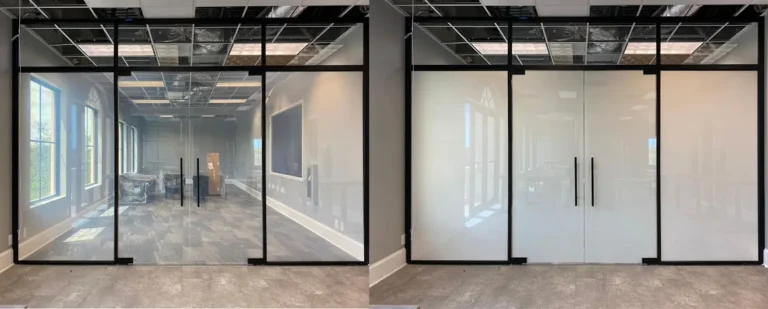
The workplace is undergoing rapid transformation. From the rise of remote work to the emphasis on employee well-being, companies are reimagining how physical space can support new ways of working. Smart glass, with its ability to morph between transparent and opaque states, has become a symbol of this change. More than just a high-tech gimmick, it’s a critical feature in the modern, adaptive, and human-centered office.
Traditional glass walls offer openness and light but fail to provide flexibility. With smart glass, transparency is a choice. Need to hold a confidential meeting? A tap on the control panel frosts the glass instantly. Want to open up the space for brainstorming? Switch it back to clear. This kind of agility supports the evolving needs of hybrid teams who share space intermittently and unpredictably.
Beyond meetings, smart glass can replace shades, blinds, and heavy partitions—reducing clutter and mechanical maintenance. Its sleek appearance aligns with minimalist design trends, creating visually appealing workspaces that are equally functional.
With hybrid work models, offices must now serve as both collaboration hubs and quiet focus zones. Smart glass enables this duality by offering visual and acoustic separation on demand. Employees no longer have to search for an isolated room or feel trapped in isolated cubicles. Instead, the space adapts to them.
Furthermore, smart glass can be integrated with sensors and smart building systems. Imagine a workspace that detects occupancy and adjusts transparency for privacy, or dims when sunlight becomes too harsh—saving energy while enhancing comfort.
In today’s competitive business landscape, every detail counts in shaping a company’s identity and how it is perceived by clients, partners, and employees. Installing smart glass technology is much more than a functional upgrade—it’s a clear and visible declaration of innovation, sustainability, and forward-thinking values.
When clients walk into an office space featuring smart glass partitions that effortlessly switch from transparent to opaque, they immediately perceive the company as cutting-edge and adaptable. It sends a strong message that the organization values both privacy and openness, blending transparency with discretion. This balance speaks to trustworthiness, modernity, and a commitment to providing optimal environments for collaboration and confidentiality.
For employees, smart glass symbolizes a progressive workplace culture that prioritizes comfort, well-being, and flexibility. It enhances the physical workspace experience, which in turn boosts morale, productivity, and loyalty. Moreover, such technology often becomes a talking point, attracting talent that values innovation and a high-tech environment.
From a sustainability perspective, smart glass reduces reliance on blinds, curtains, and artificial lighting, supporting a company’s green initiatives. It aligns with growing environmental consciousness and corporate responsibility—key factors increasingly valued by stakeholders.
In summary, smart glass acts as a branding tool as much as it does a practical feature. It embodies the company’s ethos visually and experientially, making a lasting impression and differentiating the brand in a crowded market.
The office of the future is not just a place to work; it is a dynamic environment that responds to the evolving needs of its people. Smart glass technology plays a pivotal role in shaping this future, enabling spaces to be more flexible, intelligent, and user-centric.
By offering instant privacy control, improved natural light management, and seamless integration with smart systems, smart glass transforms conventional office design into a living, breathing ecosystem. It supports hybrid working models by adapting spaces for collaboration, focus, or confidentiality—all at the tap of a button.
Beyond functionality, smart glass enhances the aesthetic appeal of interiors with its sleek, minimalist look. It eliminates the need for bulky blinds or partitions, creating a clean and modern atmosphere that reflects an organization’s commitment to innovation.
Importantly, smart glass contributes to sustainability by reducing energy consumption through natural light optimization and insulation. This aligns with corporate social responsibility goals and helps businesses meet green building certifications.
Ultimately, adopting smart glass technology signals a company’s readiness for the future—a future where technology, design, and human experience converge. It is an investment in creating workplaces that inspire, engage, and empower employees, while also impressing clients and partners.
As organizations continue to adapt to new work paradigms, smart glass stands out as an essential building block for future-ready offices—spaces where boundaries are flexible, privacy is on demand, and innovation is embedded in the very walls.