


For centuries, architecture has been built around permanence. Walls, windows, and partitions were designed to remain unchanged long after construction ended. Once a building was completed, its behavior was fixed. How light entered, how privacy was managed, and how spaces…

For much of architectural history, transparency was treated as a fixed condition. Glass either allowed visibility or it did not. Once installed, its role was largely defined. In contemporary architecture, however, transparency is no longer a static attribute. It has…

LED film technology is often evaluated by brightness, transparency, or resolution. While these technical elements are important, the true success of an LED film project depends on how well the installation is planned, integrated, and aligned with the space. In…

Transparent LED film is usually introduced with short explanations and visuals, but those descriptions rarely capture how the technology truly behaves once it becomes part of a real space. When LED film is used on glass in commercial environments, its…

Digital experiences have traditionally been confined to devices. Screens framed content and separated it from the physical environment. As architecture becomes more experiential, this separation is beginning to feel outdated. LED film represents a move beyond screens toward spatial digital…
Light has always been one of architecture’s most powerful tools. It defines space, creates atmosphere, and shapes perception. With LED film, light becomes more than an environmental element—it becomes a medium for communication embedded directly within glass. Rather than relying…

Technology has long played a visible role in architecture. Screens, panels, and digital installations were added as separate elements, often interrupting the purity of glass and form. Today, architectural technology is moving in a different direction—toward intelligence that is embedded…
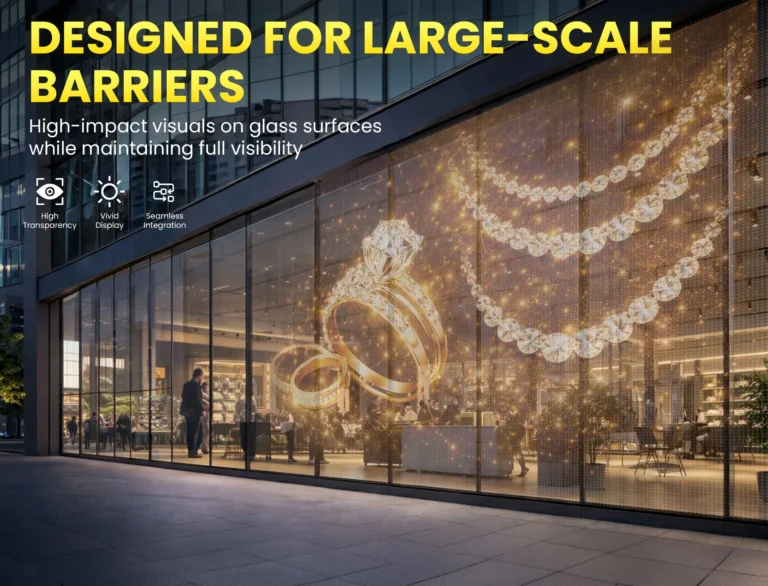
Transparent LED film is transforming architectural glass into a dynamic digital canvas. For brands like VR Smart Glass, this innovation represents more than visual appeal — it offers a new medium for communication, advertising, and modern facade storytelling. Yet, when…

Transparent LED film is transforming architectural glass into a dynamic digital canvas. For brands like VR Smart Glass, this innovation represents more than visual appeal — it offers a new medium for communication, advertising, and modern facade storytelling. Yet, when…
For decades, glass has played a passive role in architecture. It allowed light to enter, created openness, and stayed visually neutral. It was never meant to communicate. LED Film fundamentally changes this role by turning glass into an active visual…